Creating a Restorative Study Space: Desk Setup Ideas for Mental Clarity
Hi everyone. Welcome to Scholar Orbit, a one-stop global education hub dedicated to empowering lifelong learners worldwide. Through https://scholarorbit.blogspot.com, we provide access to a wide range of quality learning resources, from expert study guides and in-depth academic insights to practical skill-building tutorials. Whether you're pursuing academic excellence in school or seeking professional career advice to advance in the professional world, Scholar Orbit is here to be your ultimate guide to success. Please read on, we hope you enjoy it.
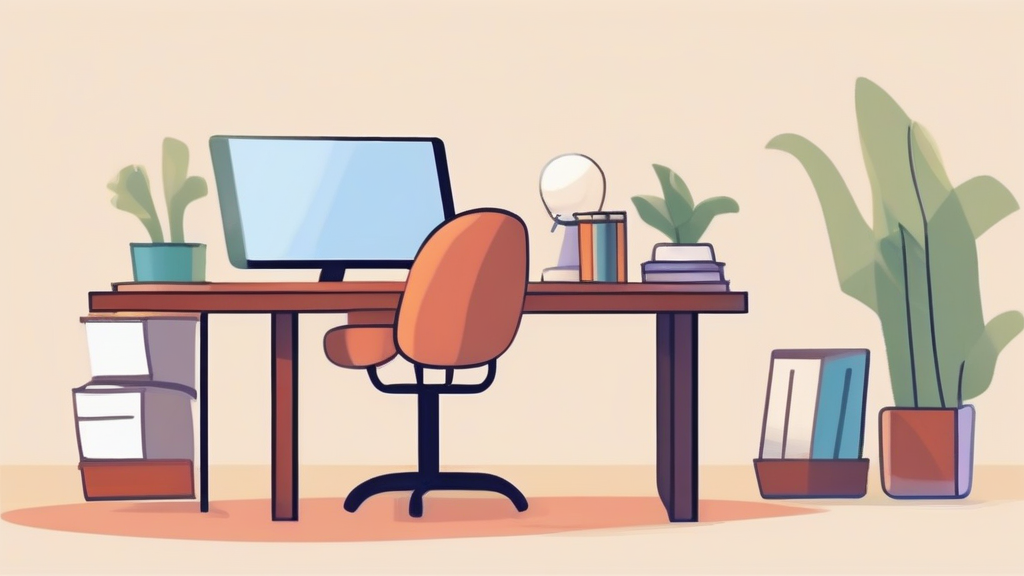
I still remember the nights I spent hunched over a cluttered desk, surrounded by empty coffee mugs and stacks of highlighters that had long since run dry. My brain felt like a browser with fifty tabs open, none of which were loading correctly. It was a classic case of hitting a wall, and honestly, I didn't know how to climb over it.
If you have ever felt your heart sink at the sight of your textbooks, you aren't alone. Learning how to overcome academic burnout and stay motivated is not just about willpower or caffeine intake. It starts with the very space where you spend your hours working. Your environment dictates your mental state, and a chaotic desk often leads to a chaotic mind.
Designing a Space That Actually Works for You
Most of us treat our desks like dumping grounds for junk mail and forgotten receipts. But if we want to change our output, we have to change our input—and that starts with the physical surface beneath our hands. A restorative study space isn't about buying expensive gadgets; it’s about intentionality.
The Psychology of Minimalist Organization
Clutter competes for your attention, even when you aren't looking at it directly. When your peripheral vision is filled with loose papers and tangled wires, your brain is constantly processing that visual noise. This leads to cognitive load, which drains your mental battery faster than actual studying does.
Try clearing everything off your desk tonight. I mean everything. Put it all in a box or a drawer. Then, add back only the essentials. You will be surprised at how much lighter your brain feels when your eyes don't have to scan through a pile of clutter to find your pen.
Lighting and Its Impact on Your Rhythm
Have you ever noticed how you feel in a dim, yellow-lit room versus a bright, sun-drenched one? Light is a powerful regulator of our circadian rhythm, which dictates our energy levels throughout the day. If your desk is tucked into a dark corner, your body might literally be telling you it is time to sleep.
- Position your desk near a window if possible to get natural sunlight.
- Use a task lamp with adjustable color temperatures.
- Cooler, blue-toned light helps with alertness during the day.
- Warmer, yellow-toned light is better for winding down in the evening.
How to Overcome Academic Burnout and Stay Motivated Through Routine
A beautiful desk is useless if your habits remain the same. The setup is the stage, but your routine is the performance. When I hit my lowest point, I realized I was trying to force productivity during hours when my brain was essentially offline. I had to learn to align my tasks with my natural peaks.
The Power of the "Shutdown Ritual"
One of the best ways to keep burnout at bay is to clearly define when your workday ends. We often keep our laptops open while we eat dinner or scroll through our phones, which keeps our brains in "work mode" indefinitely. This prevents true rest.
Create a simple closing routine. Close your laptop, put your pens in a cup, and stack your books neatly. This physical act signals to your brain that the session is done. You aren't just cleaning up; you are protecting your peace for the evening so you can wake up fresh the next day.
Breaking Tasks Into Manageable Chunks
Burnout often stems from looking at a mountain and trying to climb it in one giant leap. It’s intimidating. Instead, focus on the next five minutes. When you sit down, don't tell yourself you have to finish a 20-page paper. Tell yourself you just need to write the first paragraph.
This approach lowers the barrier to entry. By focusing on small wins, you maintain a sense of momentum. Momentum is the secret sauce for staying motivated when the work gets heavy. If you find yourself stalling, walk away from the desk for ten minutes. Movement is a great antidote to the stagnation of desk work.
Ergonomics: Why Your Body Matters
It is hard to stay motivated when your back is screaming at you. Physical discomfort is a massive distraction that most of us ignore until it becomes a chronic issue. If your chair is uncomfortable or your screen is too low, you are wasting mental energy just trying to stay upright.
Investing in your physical comfort is not an indulgence; it is a necessity for long-term productivity. You don't need a high-end ergonomic chair, but you do need to ensure your setup supports your posture. Ensure your screen is at eye level so you aren't straining your neck. Keep your feet flat on the floor.
Integrating Nature into Your Workflow
There is a reason why people feel calmer in nature. Bringing elements of the outdoors inside can significantly reduce stress. A small succulent on your desk or even a framed photo of a forest can act as a grounding visual anchor. It reminds you that there is a world outside of your screen.
Plants also improve the air quality in your room, which is a nice bonus. Just don't get something that requires too much maintenance, or you’ll end up stressed about a dying plant. Keep it simple. The goal is to create a space that breathes.
Finding Your Unique Motivation Style
We are all wired differently. Some people thrive on absolute silence, while others need ambient noise to focus. I personally love the sound of a distant coffee shop, even if I am sitting in my bedroom. There are plenty of apps and websites that provide white noise or background soundscapes to help you get into the zone.
The Role of Personalization
Your desk should feel like yours. If you love bright colors, don't feel pressured to have a monochrome, "aesthetic" desk just because that is what you see on social media. If you feel inspired by quotes, pin them up. If you like tactile objects, keep a stress ball or a fidget tool nearby.
When your space reflects your personality, you are more likely to want to spend time there. It becomes a sanctuary rather than a prison. This emotional connection to your workspace is a subtle but effective way to combat the dread that often comes with heavy workloads.
Digital Decluttering
We often focus on the physical desk, but your digital workspace is just as important. If your desktop is covered in a hundred icons, that is just more mental clutter. Spend ten minutes every Friday clearing your downloads folder and organizing your files into logical folders.
When you start your week on Monday morning, you want a clean slate. Seeing a messy digital interface is just as draining as a pile of dirty dishes. Treat your computer desktop with the same respect you treat your physical desk.
Maintaining Consistency Over Time
The biggest mistake people make is trying to overhaul their life in a single weekend. They buy a new desk, new pens, and a new planner, only to revert to their old habits within a week. Change is a slow process. Start with one small thing.
Maybe today you just clear off the top of your desk. Maybe tomorrow you adjust your chair height. Next week, you can try implementing the shutdown ritual. You don't need to be perfect; you just need to be slightly better than you were yesterday.
Listening to Your Body
If you are feeling truly exhausted, no amount of desk organization will fix it. Sometimes, the most productive thing you can do is take a nap or go for a walk. We have been conditioned to believe that rest is the opposite of work, but it is actually the foundation of it.
When you learn to respect your need for rest, you stop viewing it as a failure. You stop feeling guilty for stepping away from the desk. This shift in mindset is crucial for long-term success. You are a human being, not a machine, and your output will naturally fluctuate.
Building a Support System
It is hard to stay motivated in isolation. Reach out to friends or colleagues who are also working on their own projects. Even if you aren't working on the same things, simply knowing that someone else is grinding alongside you can make a huge difference.
Consider setting up a virtual study session where you both work quietly for an hour. This provides accountability without the pressure of constant interaction. You get the benefits of social connection without the distraction of a conversation.
Final Thoughts on Sustaining Your Drive
Designing a restorative study space is a journey of self-discovery. It is about understanding what helps you think, what drains your energy, and how to craft an environment that supports your best work. When you remove the friction from your surroundings, you make it easier for your brain to engage with the task at hand.
Remember that you are the one in charge of your space. If something isn't working, change it. If a certain setup makes you feel stagnant, shake things up. Your desk is a tool, not a cage. Use it to build the life and the career you want, one small, intentional step at a time.
Are you ready to stop fighting your environment and start working with it? Start by clearing just one corner of your desk today. You might be surprised at how much clarity that one small act can bring. Take the first step now—your future, less-stressed self will thank you for it.
If you've read my article, please leave a comment below so I can evaluate my website in the future so that Google will like it.
Post a Comment for "Creating a Restorative Study Space: Desk Setup Ideas for Mental Clarity"