How to Summarize 100 Pages of Reading in Just One Hour
Hi everyone. Welcome to Scholar Orbit, a one-stop global education hub dedicated to empowering lifelong learners worldwide. Through https://scholarorbit.blogspot.com, we provide access to a wide range of quality learning resources, from expert study guides and in-depth academic insights to practical skill-building tutorials. Whether you're pursuing academic excellence in school or seeking professional career advice to advance in the professional world, Scholar Orbit is here to be your ultimate guide to success. Please read on, we hope you enjoy it.
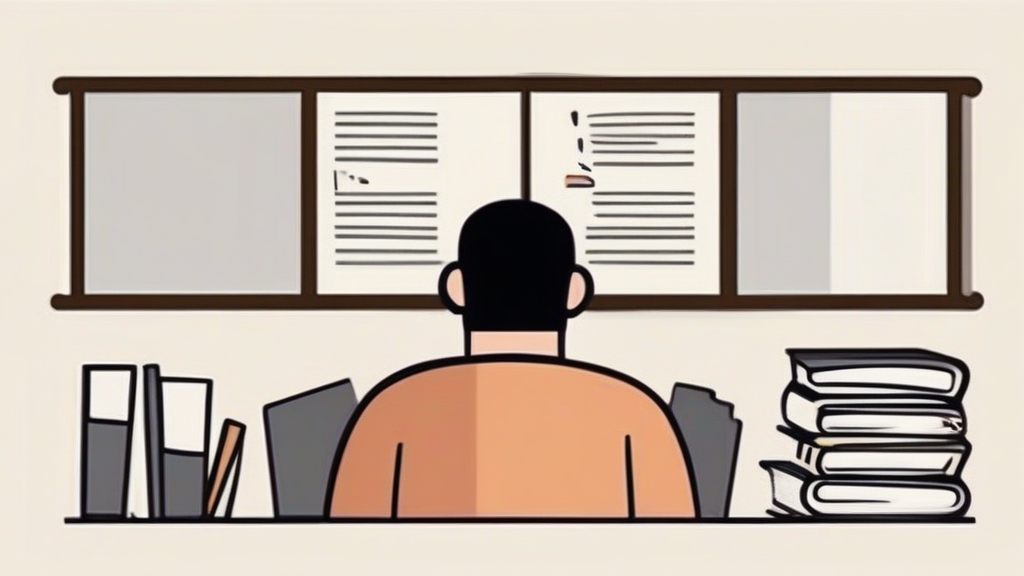
I remember sitting at my desk three days before my final exams, staring at a stack of textbooks that looked like it could anchor a small ship. One hundred pages of dense, academic jargon stood between me and a passing grade. Panic set in. I didn't have time to read every word, yet I couldn't afford to miss the core concepts. That was the moment I realized that brute-force reading is a trap. If you want to survive, you need to be smarter, not just faster.
Learning how to distill massive amounts of information is a skill that serves you long after your school years. Whether you are an online business owner trying to digest industry reports or a student under pressure, the ability to synthesize data is a superpower. By implementing note-taking strategies that actually work for final exam prep, you can cut your study time in half while actually retaining more information.
The Science of Selective Reading
Before you even pick up a highlighter, you have to change your mindset. Most people read linearly, from the first word of the first page to the last period of the last page. This is the least efficient way to process information. Instead, you need to treat a book or a report like a map. You aren't walking every street; you are looking for the landmarks.
Start by previewing the material. This is where you look at the table of contents, the index, and the bolded headers. By doing this, you build a mental scaffolding that allows you to hang the details onto a broader structure. It turns reading from a passive activity into an active search for meaning.
Applying Note-Taking Strategies That Actually Work for Final Exam Prep
When you finally start reading, stop highlighting everything. If you highlight half the page, you’ve highlighted nothing. Focus on the main idea of each section. If you can’t summarize the paragraph in one sentence after reading it, you didn't understand it well enough to highlight it in the first place.
Use the "Question-Answer" method. Before you read a sub-chapter, turn the header into a question. If the header is "The Economic Impact of Inflation," ask yourself, "What is the primary economic impact of inflation?" Now, you are reading with a specific mission. You are looking for an answer, which makes your brain much more alert.
Speeding Up Without Losing Comprehension
Many people think speed reading is about moving your eyes faster. It isn't. It is about reducing the number of times you stop to fixate on a word. Subvocalization—that little voice in your head reading the words out loud—is the biggest bottleneck. You can think much faster than you can speak, so why let your reading speed be limited by your internal monologue?
Try using a pacer. Put your finger or a pen under the line you are reading and move it across the page at a steady, brisk pace. Your eyes will naturally follow the movement. This keeps your focus locked on the text and prevents your eyes from jumping back to re-read sentences you already understood. It is a simple physical trick, but it keeps your momentum high.
Managing Information Overload
When you have 100 pages to cover in 60 minutes, you have to be ruthless. Dedicate 10 minutes to the front and back matter—the introduction, the conclusion, and the summaries. Often, the author gives away the entire argument in the first and last chapters. If you understand the conclusion first, the middle chapters become much easier to navigate because you already know where the author is going.
Focus on the cognitive load you are placing on your brain. If you try to absorb too much at once, your retention drops significantly. Break your hour into four 15-minute sprints. Take a one-minute break between each sprint to breathe and reset. Your brain is a muscle; if you push it too hard without rest, it will fatigue and stop processing new information effectively.
The Power of Summarization Techniques
Once you finish a section, don't just move on. Close the book and write down the three most important points from memory. If you can't remember them, look back, but then close the book again and try to explain it in your own words. This is called active recall. It is uncomfortable, and that is exactly why it works.
Compare this to re-reading. Re-reading feels productive because the material looks familiar, but familiarity is not the same as mastery. By forcing your brain to retrieve the information, you are strengthening the neural pathways associated with that knowledge. This is the core of effective exam preparation.
- Summarize as you go: Don't wait until the end of the 100 pages to write your summary.
- Use bullet points: They are easier for your brain to categorize than long, flowing paragraphs.
- Connect to existing knowledge: Ask how this new information relates to what you already know.
- Keep it brief: If your summary is longer than a page, you are just rewriting the book, not summarizing it.
Common Pitfalls to Avoid
One of the biggest mistakes people make is trying to summarize everything in perfect, beautiful prose. Forget grammar. Forget formatting. Your notes are for you, not for a publisher. Use shorthand, arrows, diagrams, and doodles if they help you visualize the concept. If you can draw a flow chart that explains a complex process, you have saved yourself 20 minutes of reading text.
Another pitfall is the "perfect note" trap. You spend 40 minutes making a beautiful, color-coded outline for the first 10 pages, and then you have 20 minutes left to cover the remaining 90. That is a disaster. Prioritize coverage over perfection. You can always refine your notes later if you have time, but you cannot fix a gap in your knowledge if you never reached the end of the chapter.
Maximizing Retention Through Spaced Repetition
Even if you summarize everything perfectly in that hour, you will lose a chunk of it by tomorrow if you don't reinforce it. This is where spaced repetition comes into play. Review your summaries at the end of the day, then again three days later, and finally one week later. This simple cycle prevents the "forgetting curve" from wiping out your hard work.
Think of your brain like a garden. If you plant the seeds (read the info) but never water them (review the notes), they will wither. A quick 5-minute review is often worth more than an hour of initial reading. By revisiting your notes, you signal to your brain that this information is important and needs to be stored in long-term memory.
Final Thoughts on Efficiency
Mastering the art of rapid information processing isn't about cutting corners. It is about finding the most efficient path to understanding. Whether you are prepping for a final or trying to stay ahead in your career, the principles remain the same: preview, question, read with a pacer, and practice active recall.
You have the tools now. The next time you find yourself staring at a mountain of reading, don't panic. Set your timer, grab a pen, and start mapping out the landmarks. You will be surprised at how much you can accomplish when you stop reading and start extracting value. Take control of your study sessions today and watch your productivity—and your grades—reach new heights.
If you've read my article, please leave a comment below so I can evaluate my website in the future so that Google will like it.
Post a Comment for "How to Summarize 100 Pages of Reading in Just One Hour"