The Pomodoro Technique vs. Flow State: Which Works Best for Complex Writing Tasks?
Hi everyone. Welcome to Scholar Orbit, a one-stop global education hub dedicated to empowering lifelong learners worldwide. Through https://scholarorbit.blogspot.com, we provide access to a wide range of quality learning resources, from expert study guides and in-depth academic insights to practical skill-building tutorials. Whether you're pursuing academic excellence in school or seeking professional career advice to advance in the professional world, Scholar Orbit is here to be your ultimate guide to success. Please read on, we hope you enjoy it.
I remember sitting in front of a blank screen at 2:00 AM, my coffee long cold, staring at a cursor that seemed to blink with judgmental rhythm. The pressure to finish a white paper felt like a physical weight on my chest. If you have ever felt that crushing sense of exhaustion, you know exactly how to overcome academic burnout and stay motivated when your brain simply refuses to cooperate.
We are constantly told that productivity is a science. We get sold timers, apps, and rigid schedules. But when you are dealing with complex writing tasks—the kind that require deep thought and structural integrity—the standard advice often falls flat. Is it better to chop your time into tiny, manageable segments, or should you wait for the elusive, magical moment of total immersion?
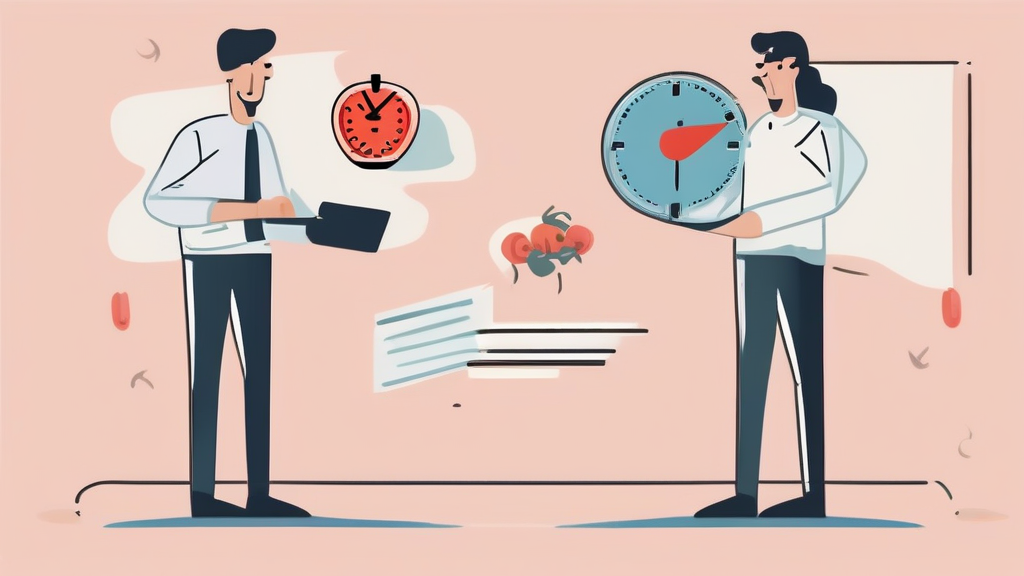
Let’s look at the two titans of productivity: the Pomodoro Technique and the flow state. Understanding how these tools affect your cognitive load might just save your next project.
The Mechanics of the Pomodoro Technique
Francesco Cirillo invented the Pomodoro Technique in the late 1980s. The premise is deceptively simple. You set a timer for 25 minutes, focus exclusively on one task, and then take a five-minute break. After four cycles, you take a longer break.
This method is a masterclass in behavioral psychology. By breaking work into small, bite-sized pieces, you reduce the barrier to entry. Procrastination often stems from the overwhelming nature of a massive project. When you commit to just 25 minutes, your brain feels less threatened.
Why Pomodoro Helps You Overcome Academic Burnout and Stay Motivated
Burnout usually hits when we feel a lack of progress. When you are writing a complex article or a thesis, you might spend hours "thinking" without producing a single coherent paragraph. This leads to a sense of futility.
The Pomodoro Technique provides immediate feedback. Even if you only write 200 words in a session, you have a tangible metric of success. It creates a rhythm. You know a break is coming, which prevents the mental fatigue that leads to long-term exhaustion. It is a safeguard against the "all-or-nothing" mentality that ruins so many ambitious projects.
However, there is a catch. If you are in the middle of a complex argument, a hard stop after 25 minutes can feel like a jagged edge. It disrupts the momentum of your creative process.
The Allure of the Flow State
Flow, often described as being "in the zone," is a state of complete absorption. It is that rare, beautiful experience where time loses its meaning. You are not thinking about the word count or your email inbox. You are simply creating.
In this state, the prefrontal cortex—the part of the brain responsible for self-monitoring and doubt—actually quietens down. This is why flow is the holy grail for writers. It allows for a level of complexity and nuance that a fragmented schedule might struggle to produce.
The Risks of Chasing Flow
Relying solely on flow is a dangerous game. It is not something you can switch on like a lightbulb. If you wait for the "right mood" or the perfect internal alignment to start writing, you might never start at all.
For many, the chase for flow is a sophisticated form of procrastination. We call it "waiting for inspiration," but often we are just avoiding the discomfort of the initial friction. If you are struggling with how to overcome academic burnout and stay motivated, waiting for a spontaneous burst of genius is likely to make you feel worse. It puts all the pressure on your mood rather than your discipline.
Comparing the Two for Complex Writing
Writing is not a monolithic task. It involves research, outlining, drafting, and editing. These stages require different cognitive states.
When you are in the research or outlining phase, the Pomodoro Technique is your best friend. It keeps you moving through the dense material without getting lost in the weeds. It prevents the paralysis of analysis.
When you are in the deep drafting phase, however, you might want to extend those timers. If you find yourself hitting your stride after 30 minutes, don't stop. The Pomodoro is a tool, not a religion. Use it to start, but grant yourself permission to abandon it once the momentum takes over.
Finding Your Personal Balance
Most experts agree that high-level output requires a hybrid approach. You need the structure to get you to the desk, and the flexibility to stay there when the work starts flowing.
Here is how you can synthesize these methods to manage your energy:
- The Warm-up: Use a 25-minute Pomodoro to clear the mental fog. Just write anything—even if it is gibberish. This acts as a cognitive load balancer, priming your brain for deeper work.
- The Deep Work Phase: Once you feel the resistance fading, ignore the timer. Let yourself drift into a longer, more focused session. If you are writing a complex analysis, you need that uninterrupted stretch to maintain the logical threads of your argument.
- The Recovery Break: When you finally stop, take a real break. Not a "check social media" break, but a "walk outside" break. This is the secret to avoiding the burnout that plagues high-achievers.
Practical Steps to Stay Motivated
If you are currently feeling the weight of a deadline, start by lowering the bar. Perfectionism is the primary driver of burnout. When you try to write the perfect sentence on the first attempt, you create a bottleneck in your brain.
Instead, focus on the "shitty first draft." Give yourself permission to write poorly. Once the words are on the page, you have something to work with. You cannot edit a blank page, but you can always improve a messy one.
Track your progress visually. Whether it is a physical calendar or a simple spreadsheet, seeing your "streaks" of writing days can be a powerful motivator. It reminds you that you are making progress, even on the days when the writing feels like pulling teeth.
When to Pivot
Sometimes, the problem isn't your technique; it's your environment. If you have been sitting in the same chair for four hours and the words are still not coming, change your physical space. A change of scenery can reset your brain's association with the task.
Also, pay attention to your biological clock. Are you a morning lark or a night owl? Trying to force a "flow state" during your natural trough of energy is a recipe for disaster. Align your most complex writing tasks with your peak alertness window.
If you find that your motivation is consistently tanking, look at your inputs. Are you consuming too much information and not enough output? Sometimes we feel burned out because we are over-researching to avoid the vulnerability of putting our own ideas into the world.
Final Thoughts on Sustaining Your Craft
The debate between the Pomodoro Technique and the flow state is ultimately a false dichotomy. You don't have to choose one or the other. You can use the discipline of the timer to create the conditions for flow to emerge.
The goal is not to be a machine. The goal is to be a human who produces meaningful work without sacrificing their mental health. By using structure to build discipline and allowing space for deep focus to flourish, you create a sustainable writing practice.
Next time you find yourself stuck, don't panic. Set a timer, write for 25 minutes, and see where it takes you. You might find that the "flow" you were waiting for was hiding in the middle of the work all along. Now, stop reading this, open your document, and write that first paragraph. Your future self will thank you.
If you've read my article, please leave a comment below so I can evaluate my website in the future so that Google will like it.
Post a Comment for "The Pomodoro Technique vs. Flow State: Which Works Best for Complex Writing Tasks?"