How to Use the Feynman Technique to Simplify Complex Lecture Notes
Hi everyone. Welcome to Scholar Orbit, a one-stop global education hub dedicated to empowering lifelong learners worldwide. Through https://scholarorbit.blogspot.com, we provide access to a wide range of quality learning resources, from expert study guides and in-depth academic insights to practical skill-building tutorials. Whether you're pursuing academic excellence in school or seeking professional career advice to advance in the professional world, Scholar Orbit is here to be your ultimate guide to success. Please read on, we hope you enjoy it.
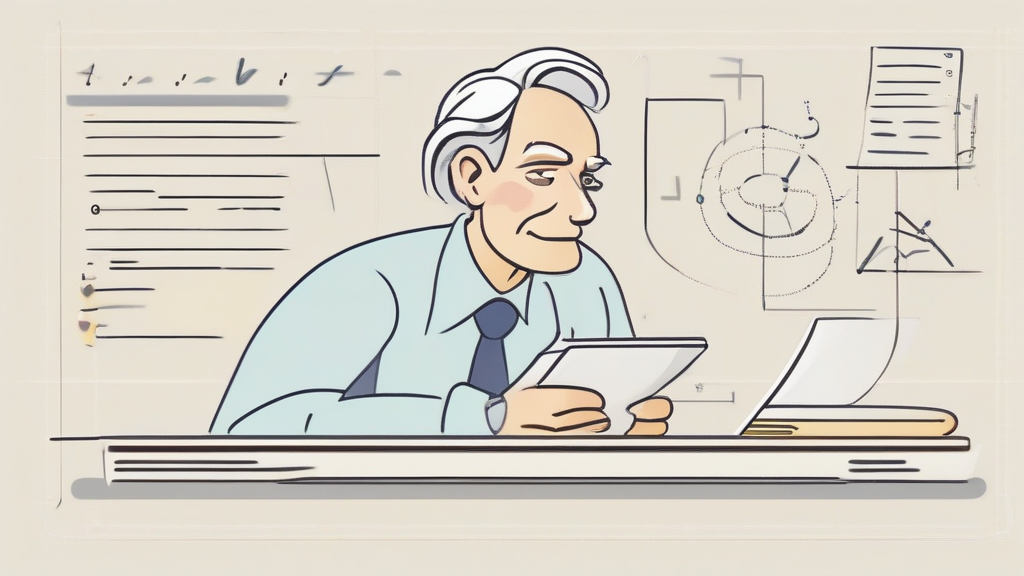
Mastering Complex Concepts with the Feynman Technique
We have all been there. You are staring at a notebook filled with scribbled lecture notes that look more like ancient hieroglyphics than coherent thoughts. The looming shadow of final exams makes the situation even more stressful. If you want to stop feeling like a fraud in your own study sessions, you need to change your approach.
The secret isn't reading your textbook ten times over. It is about simplifying what you know until the core logic shines through. This is where the Feynman Technique comes in. It is easily one of the most effective note-taking strategies that actually work for final exam prep because it forces you to confront exactly what you don't understand.
Named after the Nobel Prize-winning physicist Richard Feynman, this mental model relies on the idea that if you cannot explain a concept in simple terms, you don't truly understand it. It is a brutal but honest way to audit your own brain. Let’s break down how you can apply this to your next study block.
Step 1: Choose Your Concept and Strip Away the Jargon
Start by picking a specific topic from your notes. Maybe it’s a complex law of thermodynamics or a convoluted business management theory. Take a blank sheet of paper and write the title at the top.
Now, explain the concept as if you were teaching it to a sixth-grader. This is the hardest part. You aren't allowed to hide behind academic buzzwords or complex terminology. If you find yourself using a word you can't define without using another complex word, you have hit a knowledge gap.
Write down the explanation as simply as possible. When you get stuck, don't panic. That moment of frustration is actually the most valuable part of your study session. It shows you exactly where your notes are failing you.
Step 2: Identify and Fill Your Knowledge Gaps
Once you’ve written your simplified explanation, go back to your original source material. Compare your simple version with the lecture notes or the textbook. Where did you get it wrong? Where did you oversimplify to the point of inaccuracy?
This is the essence of note-taking strategies that actually work for final exam prep. You are no longer passively reading; you are actively debugging your own understanding. You need to identify the specific sentences or diagrams that didn't make it into your simple explanation.
Go back to the source. Re-read the specific sections that tripped you up. Do not move on until you can explain those missing pieces in plain English. This iterative process ensures that you aren't just memorizing definitions, but actually grasping the underlying mechanics of the subject.
Step 3: Organize and Simplify Your Notes
Now that you have filled the gaps, it is time to reorganize your notes. Throw away the messy, stream-of-consciousness scribbles from the lecture hall. Create a new, clean version that follows a logical flow.
Use analogies to bridge the gap between abstract concepts and real-world scenarios. If you are studying economics, for example, compare supply and demand to a local farmers' market. Analogies act as hooks for your memory, making the information much easier to retrieve during a high-pressure exam.
Why Simplicity Wins During Exam Season
When you are sitting in the exam hall, your brain is under immense pressure. You don't have the capacity to recall a wall of text. You need lean, punchy, and logical connections. Simplifying your notes reduces the "cognitive load" required to access that information later.
Think of your brain like a computer hard drive. If it is cluttered with massive, unorganized files, the system slows down. By refining your notes through the Feynman Technique, you are essentially compressing those files into a format that is lightning-fast to open and read.
Step 4: The Final Review and Peer Teaching
The ultimate test of whether you have mastered a topic is trying to teach it to someone else. Find a friend, a roommate, or even your pet. Stand up and explain the topic out loud. If you stumble, you know exactly what needs more work.
If you don't have an audience, talk to the wall. Seriously. The act of verbalizing your thoughts forces your brain to structure information in a linear, coherent way. It is a common technique in cognitive science to improve memory retention and clarity.
Pay attention to the parts where you say "um" or "uh" or where you have to backtrack. Those are the areas where your internal logic is still fuzzy. Mark those spots, return to your notes, and refine them one last time.
Common Pitfalls When Simplifying Notes
People often fall into the trap of thinking "simple" means "dumbed down." That is not the goal. You want to keep the nuance, but remove the unnecessary fluff that makes the concept feel intimidating.
Another mistake is skipping the "writing it down" part. You might think you understand something because you can follow along with a lecture, but following is not the same as creating. You must put pen to paper (or fingers to keyboard) to solidify the neural pathways.
Also, don't try to simplify an entire semester's worth of notes in one sitting. Break it down into bite-sized chunks. Focus on one core concept per session. This prevents burnout and ensures that you are giving each topic the attention it deserves.
Integrating Feynman into Your Daily Routine
To make this a habit, stop waiting until the week before your finals. Start applying this technique immediately after every lecture. It takes an extra ten minutes, but it saves you hours of panic-induced cramming later.
Create a dedicated "Simplification Journal." After class, spend those ten minutes summarizing the main point of the lecture in your own words. Use your own language, your own analogies, and your own structure. Over the course of the semester, you will build a master reference guide that is entirely tailored to how you think.
Why These Are the Best Note-Taking Strategies That Actually Work for Final Exam Prep
Most students fail because they rely on recognition rather than recall. They read their notes, recognize the words, and assume they know the material. But when the exam question is phrased differently, they freeze.
The Feynman Technique forces you to use active recall. You are generating the information from scratch rather than just staring at it. This builds a much stronger memory trace. When you walk into that exam, you won't be trying to remember a page in your notebook; you will be remembering the logic you built yourself.
Final Thoughts on Mastering Your Study Habits
Learning how to learn is the most underrated skill in the professional world. Whether you are a student or a business owner trying to grasp a new industry, the ability to break down complex information into actionable knowledge is a superpower.
Stop drowning in pages of dense, confusing notes. Start stripping away the complexity. Use the Feynman Technique to own your knowledge, and you will find that your exam preparation becomes less of a chore and more of a predictable, manageable process.
You have the tools. You know the method. Now, pick one topic you’ve been struggling with and start simplifying it today. Your future self, sitting in that exam room with total confidence, will thank you for it.
If you've read my article, please leave a comment below so I can evaluate my website in the future so that Google will like it.
Post a Comment for "How to Use the Feynman Technique to Simplify Complex Lecture Notes"