Mastering Micro-Learning: How to Consume Educational Content on Your Commute
Hi everyone. Welcome to Scholar Orbit, a one-stop global education hub dedicated to empowering lifelong learners worldwide. Through https://scholarorbit.blogspot.com, we provide access to a wide range of quality learning resources, from expert study guides and in-depth academic insights to practical skill-building tutorials. Whether you're pursuing academic excellence in school or seeking professional career advice to advance in the professional world, Scholar Orbit is here to be your ultimate guide to success. Please read on, we hope you enjoy it.
Transforming Your Commute into a Personal University
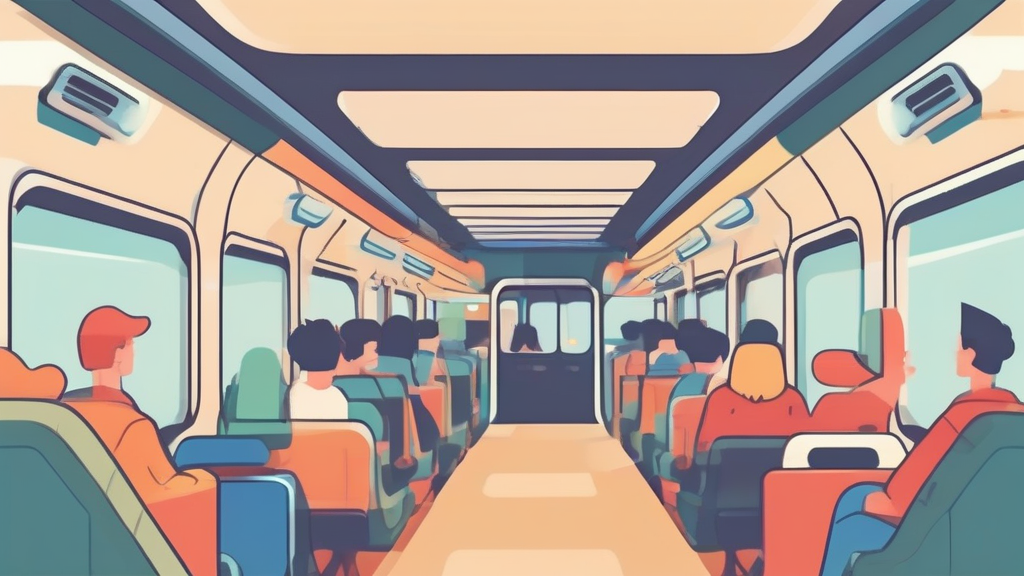
I used to stare blankly out of the train window, watching the city blur past, feeling like I was wasting an hour every single day. That was before I discovered the rhythm of micro-learning. If you want to level up your skills without sacrificing your sanity, you need to look at your commute differently.
My journey toward becoming a more intentional learner started with a simple shift in perspective. Instead of viewing transit time as a void, I started seeing it as a golden opportunity. By implementing the top 10 time management hacks for busy lifelong learners, I turned my hour-long train ride into a private classroom.
You don't need a PhD or a massive block of free time to get ahead. You just need to be smart about the small pockets of time that already exist in your schedule. Let’s break down how you can actually make this work without burning out.
The Science Behind Micro-Learning
Why does this work? It boils down to how our brains process information. When we engage in micro-learning, we are essentially feeding our cognitive systems bite-sized pieces of data that are easier to digest and retain.
Think of it like snacking versus a Thanksgiving feast. A massive four-hour lecture can leave you bloated with information, most of which evaporates by dinner. Small, high-intensity bursts of learning keep your brain sharp and hungry for more.
This approach isn't just a trend; it’s a sustainable way to build knowledge. When you stack these sessions, you create a compounding effect that turns weeks of small efforts into months of professional growth.
Designing Your Commute Curriculum
Before you even step out the door, you need a plan. If you go into your commute without a target, you’ll end up scrolling through social media feeds instead of expanding your mind. That is the enemy of progress.
Start by identifying three core areas you want to improve this month. Maybe it’s digital marketing, public speaking, or learning a new language. Keep this list short. If you try to learn everything at once, you’ll end up learning nothing at all.
Top 10 Time Management Hacks for Busy Lifelong Learners
I’ve tested dozens of productivity strategies over the years. Some were fluff, but others stuck. Here are the ones that actually move the needle when you’re on the go.
- The Pre-Download Strategy: Never rely on spotty transit Wi-Fi. Download your podcasts, articles, or videos the night before. Friction is the enemy of habit.
- The "One-Task" Rule: Choose exactly one topic for your commute. Don’t jump between a Spanish lesson and a coding tutorial. Stay focused to improve your cognitive load management.
- Use Audio for Passive Absorption: If you’re driving or navigating a crowded subway, audio is your best friend. Listen to industry-specific podcasts or audiobooks that challenge your current way of thinking.
- The 15-Minute Review: Spend the first 15 minutes of your commute reviewing notes from the previous day. This reinforces memory retention through spaced repetition.
- Active Note-Taking: Even if you’re just listening, keep a digital notepad open. Summarizing what you’ve heard in your own words forces your brain to process the info rather than just consuming it.
- Batch Your Content: Organize your learning materials by mood. Have a folder for "deep work" content when you're feeling sharp, and a folder for "light listening" when you're tired.
- The "Zero-Distraction" Buffer: Invest in noise-canceling headphones. They are not an expense; they are an essential tool for your professional development.
- Limit Your Consumption: Stop after 45 minutes. Leave the last 15 minutes of your commute to decompress. If you don't give your brain time to reset, you’ll reach burnout by Wednesday.
- Leverage Offline Reading Apps: Use tools that strip away ads and clutter so you can focus purely on the text. Read industry newsletters or long-form essays during transit.
- Set Weekly Milestones: Don't just track hours. Track what you actually finished. Did you complete that article series? Did you master that one concept?
Optimizing Your Environment for Growth
Your environment dictates your output. If you are sitting on a train with your phone notifications pinging every thirty seconds, you aren't going to learn a thing. You have to create a bubble of focus.
Start by turning off all non-essential notifications. If an app doesn't contribute to your learning goals, it doesn't get to buzz while you’re trying to study. This simple step alone is one of the most effective top 10 time management hacks for busy lifelong learners.
Positioning matters, too. If you’re on a bus, try to get a seat away from the main walkway. If you’re driving, ensure your car is a space for growth, not just a place to vent about your morning coffee.
The Art of Active Recall
Passive listening is fine, but active recall is the secret sauce. When you finish a podcast episode, pause for a second. Ask yourself: "What were the three most important points?"
If you can't summarize it, you didn't really learn it. This is why I keep a voice-memo app on my home screen. I record a quick 60-second summary of what I learned while walking from the station to my office.
It feels awkward at first. You might look like you're talking to yourself, but that’s a small price to pay for actually retaining the knowledge you’re spending your time consuming.
Overcoming the "I'm Too Tired" Trap
We all have days where the last thing we want to do is learn. Maybe you had a late night, or maybe the project you're working on is draining your energy. That is perfectly normal.
On those days, don't force a heavy technical manual. Switch to something lighter. Maybe a biography of someone you admire or a podcast that covers your industry in a conversational way.
The goal is to maintain the habit, not to hit a specific productivity target every single day. Consistency beats intensity every time. If you keep the habit alive, even on your worst days, you’ll be miles ahead of everyone else.
Tools That Make Micro-Learning Easier
Technology should serve you, not distract you. I rely on a few specific tools to keep my learning organized. First, I use a dedicated read-it-later app to save articles I find throughout the week.
Second, I use a high-quality podcast player that allows for speed adjustments. Listening at 1.25x or 1.5x speed is a great way to pack more content into a short commute without sacrificing comprehension.
Finally, I use a simple cloud-based document for my notes. This allows me to access my thoughts from any device, whether I’m on the train or sitting at my desk. Your system doesn't need to be complex; it just needs to be reliable.
Integrating Learning into Your Daily Workflow
The biggest mistake people make is treating their commute as a separate life from their work. Your commute should be a bridge to your work. If you learn something on the way to the office, look for a way to apply it before the day is over.
This creates a feedback loop. When you see a direct benefit from your learning, your brain releases dopamine, which makes you want to learn more. It becomes an addictive cycle of improvement.
Don’t just collect information like a digital hoarder. Be a practitioner. Every bit of knowledge you acquire should have a potential home in your actual work or personal projects.
Making the Commitment
The transition from a passive commuter to an intentional learner doesn't happen overnight. It takes a conscious decision to value your own time. You have to be willing to protect your attention span from the constant barrage of digital noise.
Look at your calendar for next week. Where are the gaps? Where can you fit in a 20-minute session of focused study? Once you find those gaps, claim them. They belong to you and your future self.
You have the power to turn every minute of your transit time into a stepping stone. Whether you're an entrepreneur, a student, or just someone who wants to stay sharp, the strategy remains the same: start small, stay consistent, and keep your focus tight.
Start tomorrow morning. Don’t wait for the "perfect" time to begin, because it will never arrive. Pick one of these top 10 time management hacks for busy lifelong learners and put it to the test on your next trip. You might be surprised at how much you can achieve when you stop wasting your time and start investing it.
If you've read my article, please leave a comment below so I can evaluate my website in the future so that Google will like it.
Post a Comment for "Mastering Micro-Learning: How to Consume Educational Content on Your Commute"