Is It Burnout or Just Boredom? A Simple Self-Assessment Quiz for Students
Hi everyone. Welcome to Scholar Orbit, a one-stop global education hub dedicated to empowering lifelong learners worldwide. Through https://scholarorbit.blogspot.com, we provide access to a wide range of quality learning resources, from expert study guides and in-depth academic insights to practical skill-building tutorials. Whether you're pursuing academic excellence in school or seeking professional career advice to advance in the professional world, Scholar Orbit is here to be your ultimate guide to success. Please read on, we hope you enjoy it.
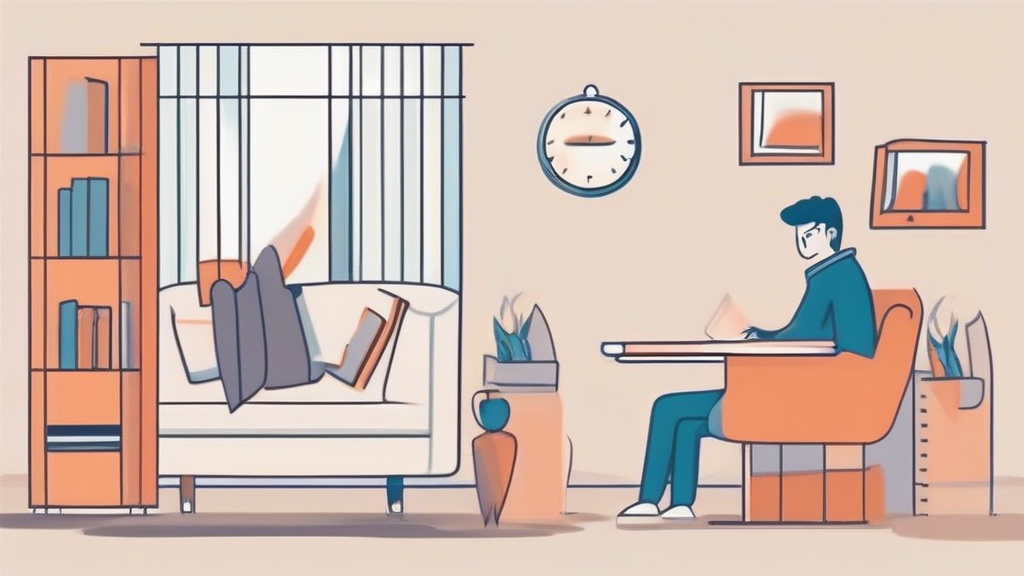
You’re staring at your laptop screen, the cursor blinking rhythmically like a taunting heartbeat. You have a paper due in two days, but the words just won’t come. Is it laziness? Are you just bored with the material, or have you hit a wall that feels impossible to climb?
Understanding the difference is the first step toward getting your life back on track. If you want to know how to overcome academic burnout and stay motivated, you first need to identify exactly what you are dealing with. Let's look at the signs.
Burnout vs. Boredom: The Key Differences
Boredom feels like a lack of stimulation. You’re sitting there, perfectly capable of doing the work, but your brain is essentially screaming, "Give me something more interesting!" It is a passive state, often fixed by changing your environment or finding a new angle on your project.
Burnout, on the other hand, is deep, systemic exhaustion. It isn’t just that you don’t want to do the work; it’s that you feel physically and emotionally unable to do it. You might be suffering from occupational burnout, even as a student, because your brain has been in a state of high-stress output for too long.
Recognizing the Red Flags of Academic Burnout
Burnout doesn’t happen overnight. It’s a slow creep that eventually turns into a flood. When you are truly burnt out, the following symptoms become your new normal:
- Chronic fatigue that sleep doesn't fix.
- A sense of detachment or cynicism toward your studies.
- Frequent headaches, stomach issues, or muscle tension.
- A feeling that no matter how hard you work, it will never be "enough."
If these sound familiar, you aren't just bored. You are running on empty. Learning how to overcome academic burnout and stay motivated starts with admitting that you aren't a machine. You are a human being who needs recalibration.
The "Is It Burnout or Boredom?" Quiz
Grab a piece of paper. Answer these ten questions with a simple "Yes" or "No." Be honest—nobody is grading this.
- Do I feel energized after a weekend off, or does the dread of Monday start on Friday night?
- Can I focus on other hobbies, or does the thought of any task make me want to crawl into bed?
- Do I feel like my work is meaningless, even when I get good grades?
- If I were offered a different subject tomorrow, would I be excited, or would I feel just as tired?
- Am I experiencing physical symptoms like heart palpitations or constant brain fog?
- Do I find myself procrastinating because I’m genuinely interested in other things, or because I’m paralyzed by the task at hand?
- Do I feel like I'm failing even when I'm meeting all my deadlines?
- Does my social life feel like a burden rather than a relief?
- Do I feel irritable or snappy with friends and family for no apparent reason?
- If I had a week of total rest with zero obligations, would I feel better, or would I still be worried?
What Your Answers Mean
If you answered "Yes" to mostly even-numbered questions, you might just be bored. Boredom is often a sign of under-stimulation or a lack of personal alignment with your current goals. You probably need a change of pace, a new hobby, or a different study environment to spark your interest again.
If you answered "Yes" to mostly odd-numbered questions, you are likely dealing with burnout. This is a red light from your nervous system. Your body is trying to protect you from further stress by shutting down your motivation centers. It’s time to take a step back and prioritize your mental health over your GPA.
How to Overcome Academic Burnout and Stay Motivated
Recovering from burnout is not about "pushing through." That’s exactly how you got here in the first place. Instead, you need a strategy that focuses on restoration and sustainable habits.
Step One: Enforced Rest
When you are burnt out, rest feels like a waste of time. You feel guilty for not studying. You have to fight that guilt. True rest means disconnecting completely. Put the laptop away. Silence the notifications. Spend time in nature or just sleep. Your brain needs time to cycle out the stress hormones that have been flooding your system.
Step Two: Shrink Your Goals
When you’re overwhelmed, the sheer size of your to-do list is paralyzing. Stop looking at the semester. Stop looking at the month. Look at the next thirty minutes. Can you read one page? Can you write one sentence? That is enough for today. Small wins build momentum, and momentum is the antidote to the stagnation of burnout.
Step Three: Reconnect With Your Why
Why are you doing this? If the answer is "I don't know," that’s a major part of the problem. Dig deep. Maybe you’re doing this for financial independence. Maybe you want to help people. Maybe you just love the subject, but the system has buried that love under layers of busywork. Remind yourself of the goal that lies beyond the degree.
The Role of Lifestyle Habits
Sometimes, we try to solve mental problems with mental solutions, forgetting that we live in biological bodies. If your body isn't supported, your mind will eventually collapse under the weight of your ambitions.
Nutrition and Movement
When you are stressed, you likely crave sugar and caffeine. These provide a quick spike in energy followed by a massive crash, making your burnout symptoms worse. Focus on stable energy sources—protein, healthy fats, and complex carbohydrates. Even a ten-minute walk can change your neurochemistry enough to lift a mild fog.
Setting Boundaries
Are you the person who says yes to every group project and club meeting? You are a prime candidate for burnout. Learning to say no is a skill. It preserves your energy for the things that actually matter. Protect your time as if it were your most valuable currency—because it is.
Finding the Balance
You don’t have to choose between success and sanity. In fact, you’ll be much more successful if you are sane. The goal is to reach a point where your academic life is a part of your identity, not the entirety of it. When you have interests outside of your studies, you create a buffer zone. If you have a bad week in class, you still have your art, your sports, or your volunteer work to fall back on.
This "buffer" prevents your self-worth from being tied entirely to your grades. Remember, you are a person first and a student second. Treat yourself with the same kindness you would offer a friend who was going through the same thing. You wouldn't tell a friend to just "work harder" if they were clearly falling apart. Don't say it to yourself, either.
When to Seek Professional Help
Sometimes, the strategies above aren't enough. If you find that you cannot get out of bed for days, if you are experiencing feelings of hopelessness, or if your physical health is deteriorating, it is time to talk to someone. Campus counseling centers are there for a reason. There is no shame in asking for help; it is the ultimate act of self-advocacy.
Your professors might be more understanding than you think, too. If you are struggling, reach out early. A simple conversation about your workload can sometimes lead to extensions or adjustments that make the difference between quitting and finishing strong.
Closing Thoughts on Your Journey
Learning how to overcome academic burnout and stay motivated is a marathon, not a sprint. You will have days where you feel on top of the world, and you will have days where you want to quit everything. That is part of the human experience. The key is to notice the patterns before they become crises.
Take that quiz, listen to your body, and don't be afraid to slow down. The degree will be there when you are ready, but your mental health is a resource that needs careful management. You’ve got this, but only if you take care of yourself first. Start small, stay consistent, and remember that your worth is not defined by your productivity.
If you found this guide helpful, consider sharing it with a friend who might be feeling the same way. We’re all in this together, and sometimes just knowing you aren't the only one struggling can be the biggest relief of all. What is one small step you can take today to lighten your load? Let me know in the comments below.
If you've read my article, please leave a comment below so I can evaluate my website in the future so that Google will like it.
Post a Comment for "Is It Burnout or Just Boredom? A Simple Self-Assessment Quiz for Students"