Cultural Quotient (CQ) Explained: Navigating Global Collaboration as a New Graduate
Hi everyone. Welcome to Scholar Orbit, a one-stop global education hub dedicated to empowering lifelong learners worldwide. Through https://scholarorbit.blogspot.com, we provide access to a wide range of quality learning resources, from expert study guides and in-depth academic insights to practical skill-building tutorials. Whether you're pursuing academic excellence in school or seeking professional career advice to advance in the professional world, Scholar Orbit is here to be your ultimate guide to success. Please read on, we hope you enjoy it.
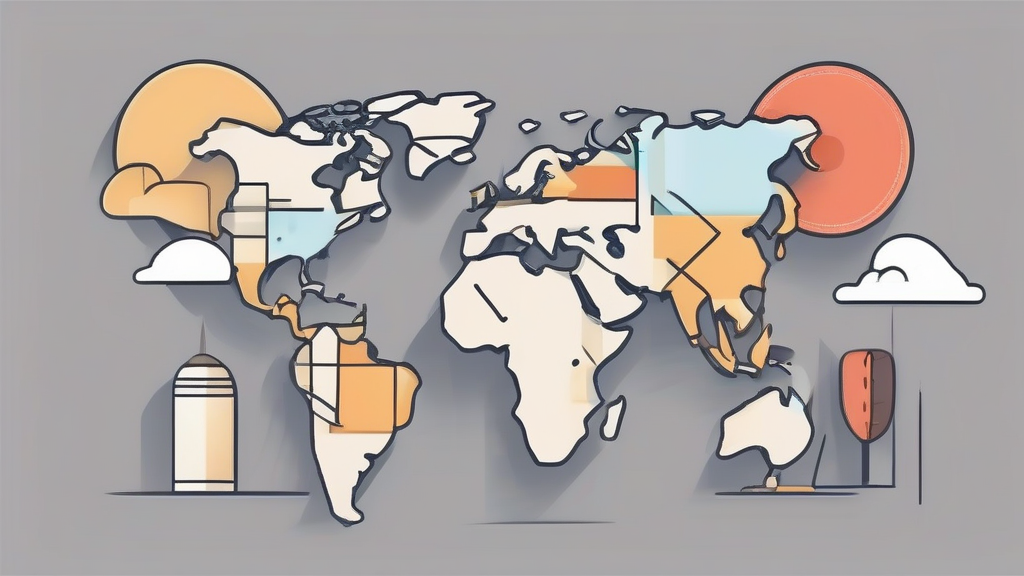
Mastering cultural quotient for global collaboration is the single most important skill you can develop as you step into your first international role. It isn't just about learning where a country is on a map; it's about learning how to listen when words mean something entirely different than what the dictionary suggests.
Key Insights
- CQ is a measurable skill set, not an innate personality trait.
- High CQ directly correlates with faster project delivery and reduced team conflict.
- Cultural friction is often a communication breakdown, not a character flaw.
- Adaptability is the primary metric for success in cross-border teams.
Think of cultural intelligence like a muscle. You don't walk into the gym and bench press 300 pounds on day one. You start small. You observe. You stretch.
Most graduates assume that being "nice" is enough. It isn't. Nice is universal, but high-context communication is not. In Japan, silence is a sign of respect and contemplation. In the United States, silence is often viewed as a lack of engagement or a technical glitch. If you misread the silence, you misread the entire meeting.
Why Cultural Quotient for Global Collaboration Matters
Global teams are like a high-end jazz band. Everyone is playing from the same sheet music, but the tempo and improvisational style vary by region. If you play solo in a rhythm section, the whole performance falls apart.
Business is no longer local. Your code might be written in Bangalore, your design in Berlin, and your marketing strategy in New York. Navigating this web requires more than just cross-cultural communication; it requires a strategic shift in how you process information.
| Dimension | Low CQ Approach | High CQ Approach |
|---|---|---|
| Conflict | Avoidance or aggressive confrontation | Seeking underlying cultural drivers |
| Feedback | Direct and blunt | Tailored to the recipient's culture |
| Hierarchy | Uniform treatment of all levels | Adapting to local power dynamics |
Building Your CQ Strategy
Start with cognitive CQ. This is your knowledge base. Research the business etiquette of your counterparts before you log onto that first Zoom call. Understand if they prioritize the relationship or the contract first. Do they value collective consensus or individual expertise?
Next, focus on behavioral CQ. This is where the rubber meets the road. Watch your body language. Mimic the pacing of your counterparts. If they are formal, don't rush to use first names immediately. If they are informal, don't alienate them with stiff, rigid corporate speak.
Never assume your way is the "correct" way. It is simply the way you were taught. When you stop looking for the "right" answer and start looking for the "functional" answer, you unlock new levels of team cohesion.
FAQ: Common Questions About CQ
What are the four components of CQ?
The four components are Drive (motivation), Knowledge (understanding cultural differences), Strategy (planning), and Action (adapting behavior). You need all four to move from awareness to execution.
How does CQ influence team performance?
Teams with high CQ experience fewer misunderstandings. They resolve conflicts faster because they aren't taking cultural differences as personal attacks. This creates a psychological safety net that allows for more creative risk-taking.
Can you improve your CQ without traveling?
Absolutely. You can build CQ by seeking out diverse perspectives in your current environment. Listen to podcasts from different regions, read international news sources, and actively mentor or be mentored by colleagues from different cultural backgrounds.
You have the technical skills to get the job, but your cultural intelligence will determine how far you climb. Embrace the discomfort of not knowing. Ask questions. Stay curious. Your global career depends on your ability to connect across borders, one conversation at a time.
If you've read my article, please leave a comment below so I can evaluate my website in the future so that Google will like it.
Post a Comment for "Cultural Quotient (CQ) Explained: Navigating Global Collaboration as a New Graduate"