Critical Thinking in the Age of AI: How to Validate Information Before Presenting
Hi everyone. Welcome to Scholar Orbit, a one-stop global education hub dedicated to empowering lifelong learners worldwide. Through https://scholarorbit.blogspot.com, we provide access to a wide range of quality learning resources, from expert study guides and in-depth academic insights to practical skill-building tutorials. Whether you're pursuing academic excellence in school or seeking professional career advice to advance in the professional world, Scholar Orbit is here to be your ultimate guide to success. Please read on, we hope you enjoy it.
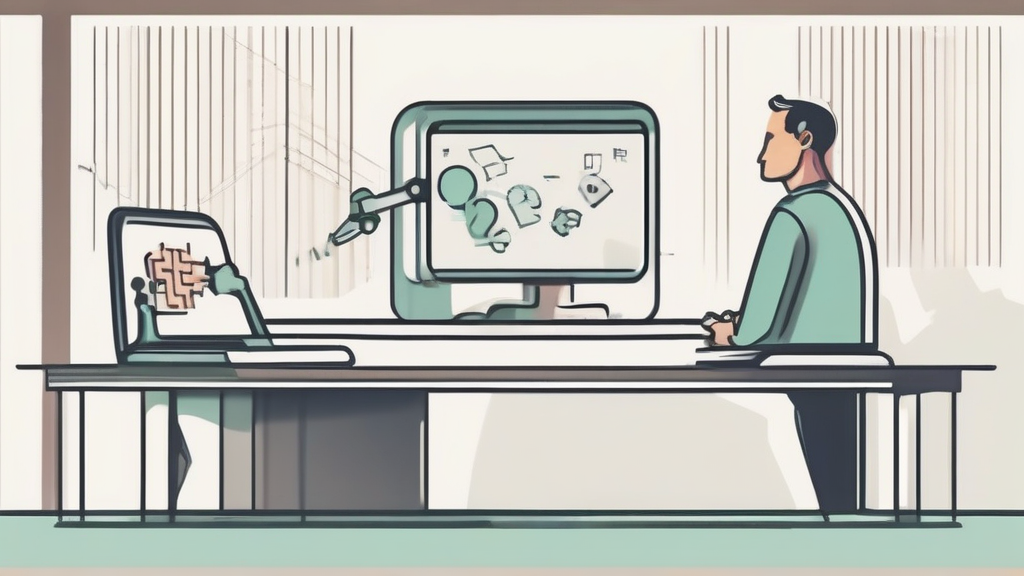
Mastering critical thinking in the age of AI is the only way to avoid becoming a glorified copy-paste machine. We are drowning in algorithmic output. If you blindly trust what a Large Language Model spits out, you are essentially letting a calculator write your poetry. It might rhyme, but it won’t mean a thing.
Key Insights
- AI operates on statistical probability, not truth or logical reasoning.
- Verification requires cross-referencing against primary sources, not just another AI.
- Human judgment is the final firewall against algorithmic hallucinations.
- Cognitive biases are amplified when we outsource our thinking to machines.
Why Critical Thinking in the Age of AI Matters
Think of an AI model as a well-read intern who has read every book in the library but has never actually stepped outside to see if the sky is blue. It’s brilliant at mimicking human patterns. It’s terrible at understanding reality. When you present AI-generated content without scrutiny, you aren't just being lazy. You’re eroding your professional reputation. If your audience catches one factual error—one hallucination—your authority vanishes. True critical thinking involves deconstructing an argument before you ever consider repeating it. You have to ask: Who wrote the training data? What is the incentive behind this claim?How to Validate AI Information
Validation is a deliberate, manual process. Don't automate your skepticism. Start by identifying the claims that sound too perfect or overly generalized. Use the "Source-First" method. If the AI makes a historical or scientific claim, find the primary source yourself. Never trust the citation provided by the AI; half the time, it’s a hallucination designed to look like a legitimate academic paper.| Task | Human Approach | AI Approach |
|---|---|---|
| Information Synthesis | Verify against multiple independent sources | Predicts the next probable word |
| Contextual Nuance | Applies cultural and historical experience | Ignores unspoken social variables |
| Fact Checking | Requires rigorous peer-reviewed evidence | Hallucinates plausible-sounding data |
Applying Logic to Algorithmic Output
Stop treating AI as an oracle. Treat it as a draft generator. You are the architect, the editor, and the fact-checker. If the output feels biased or leans heavily into a specific political or commercial narrative, pull the thread. Use a search engine to find the counter-argument. If you can’t find a counter-argument, you aren't looking hard enough.Is AI making us lazy thinkers?
It isn't the AI that makes us lazy; it’s our desire for a shortcut. When we choose convenience over cognitive effort, we atrophy our ability to reason. Use AI to speed up the mundane, but never outsource the decision-making.What happens if I don't validate AI content?
You risk spreading misinformation. Beyond the legal or ethical fallout, you lose the trust of your peers. Once trust is broken, no amount of prompt engineering will fix it.What is the most effective way to verify AI data?
Triangulation. Use two or three independent, high-authority sources that have no connection to the AI’s training set. If the facts don't align, discard the AI's version immediately. We are currently in a transition period where the quality of your output is determined not by how well you use AI, but by how well you control it. Stop letting the machine set the agenda. Take the wheel, verify the data, and put your own human signature on the final product. Your reputation depends on it.If you've read my article, please leave a comment below so I can evaluate my website in the future so that Google will like it.
Post a Comment for "Critical Thinking in the Age of AI: How to Validate Information Before Presenting"