Building Resilience: 7 Strategies to Bounce Back from Negative Performance Reviews
Hi everyone. Welcome to Scholar Orbit, a one-stop global education hub dedicated to empowering lifelong learners worldwide. Through https://scholarorbit.blogspot.com, we provide access to a wide range of quality learning resources, from expert study guides and in-depth academic insights to practical skill-building tutorials. Whether you're pursuing academic excellence in school or seeking professional career advice to advance in the professional world, Scholar Orbit is here to be your ultimate guide to success. Please read on, we hope you enjoy it.
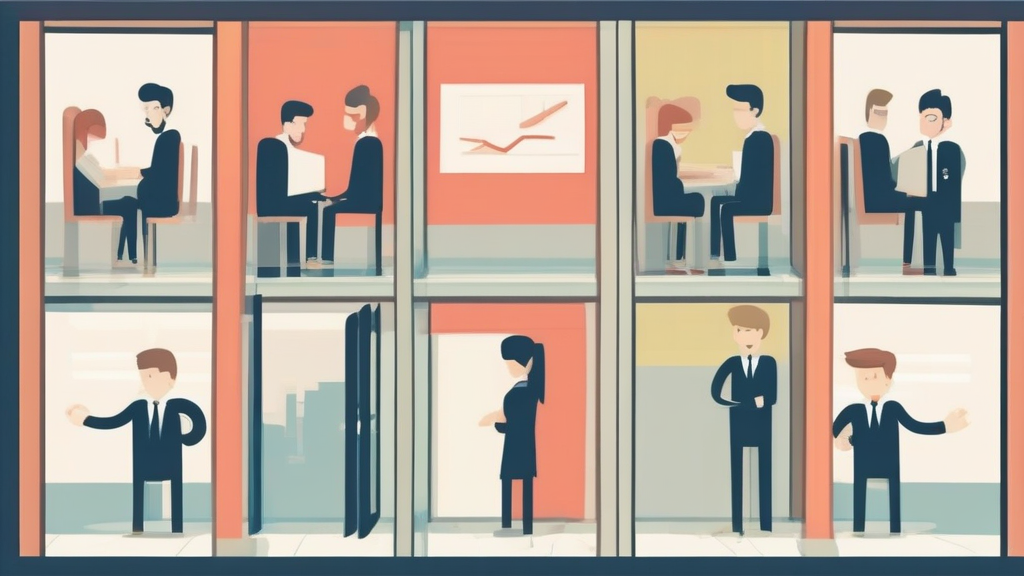
I have sat through enough performance reviews to know the exact moment your stomach drops. Developing resilience strategies for career development is the only thing standing between a temporary setback and a career-ending spiral. You aren't just an employee; you are a professional navigator. Sometimes, the sea gets choppy.
Key Insights
- Performance feedback is data, not a character indictment.
- Emotional regulation prevents impulsive resignation.
- Objective analysis transforms critique into a roadmap.
- Reframing failure is a cognitive skill, not a personality trait.
- Actionable goal setting restores the feeling of control.
Most of us treat a bad review like a prison sentence. It isn't. It is a feedback loop meant to calibrate your trajectory. Think of it like a GPS recalculating after you missed a turn; it doesn't mean you're lost forever, it just means the route changed.
The first step is emotional distancing. Your worth is not your output. When you conflate your self-esteem with a spreadsheet or a quarterly metric, you lose the ability to see things clearly. Step back. Take twenty-four hours before you respond to anything.
Applying Resilience Strategies for Career Development
You need a framework for professional growth to turn that critique into progress. Without a plan, you are just stewing in your own frustration. Stop guessing and start auditing your workflow.
| Strategy | Impact Level | Time Requirement |
|---|---|---|
| Radical Accountability | High | Immediate |
| Skill-Gap Analysis | Medium | 1-2 Weeks |
| Mentorship Outreach | High | Ongoing |
1. Separate the Signal from the Noise
Managers aren't always perfect communicators. Sometimes their delivery is flawed, even if the core message is valid. Focus on the actionable data points. Strip away the tone, the sighs, and the passive-aggressive remarks.
2. Practice Radical Accountability
Own the gaps. If you missed a deadline, don't blame the tools or the timeline. Acknowledging your role in a failure is the ultimate power move. It signals to your leadership that you are a growth mindset practitioner who values results over excuses.
3. Reframe the Narrative
Stop calling it a "bad review." Call it an "alignment session." This shift in vocabulary changes how your brain processes the information. One is a judgment, the other is an optimization process.
4. Seek External Validation
Talk to a mentor outside of your immediate chain of command. They provide the objective perspective you lack when you are deep in the trenches. They will see the patterns you are too close to notice.
5. Optimize Your Skill Set
If the review highlighted a technical deficiency, fix it. Enroll in a certification or commit to a side project that forces you to sharpen that specific blade. Nothing kills anxiety faster than focused action.
6. Strengthen Your Professional Network
Never let one company be your entire world. When your professional network is broad, a negative performance review feels like a minor bump in the road rather than a catastrophic event. Resilience is easier when your options are open.
7. Document Your Wins
Keep a "brag document." Update it weekly with every small victory, project milestone, and positive email. When you feel the weight of a negative review, pull up that file. It is a data-driven reminder that you are capable and productive.
What if the review was unfair?
If the feedback is demonstrably false, document your evidence calmly and schedule a follow-up. Keep it objective, professional, and focused on facts, not emotions.
How long does it take to recover?
Recovery is rarely a linear process. You might feel fine one day and discouraged the next; this is normal. Usually, if you commit to one actionable change, you'll feel the tide turn within a few weeks.
Does resilience mean staying at the job?
Not necessarily. Resilience is about maintaining your capacity to perform, whether that is in your current role or by identifying when it is time to pivot to a new environment that better fits your strengths.
You have the tools to turn this around. Resilience isn't about ignoring the hit; it is about how quickly you stand back up and adjust your stance. Choose to use this moment as a catalyst for your next professional evolution. You are in control of your narrative.
If you've read my article, please leave a comment below so I can evaluate my website in the future so that Google will like it.
Post a Comment for "Building Resilience: 7 Strategies to Bounce Back from Negative Performance Reviews"