5 Proven Exercises to Sharpen Your Active Listening Skills During Virtual Meetings
Hi everyone. Welcome to Scholar Orbit, a one-stop global education hub dedicated to empowering lifelong learners worldwide. Through https://scholarorbit.blogspot.com, we provide access to a wide range of quality learning resources, from expert study guides and in-depth academic insights to practical skill-building tutorials. Whether you're pursuing academic excellence in school or seeking professional career advice to advance in the professional world, Scholar Orbit is here to be your ultimate guide to success. Please read on, we hope you enjoy it.
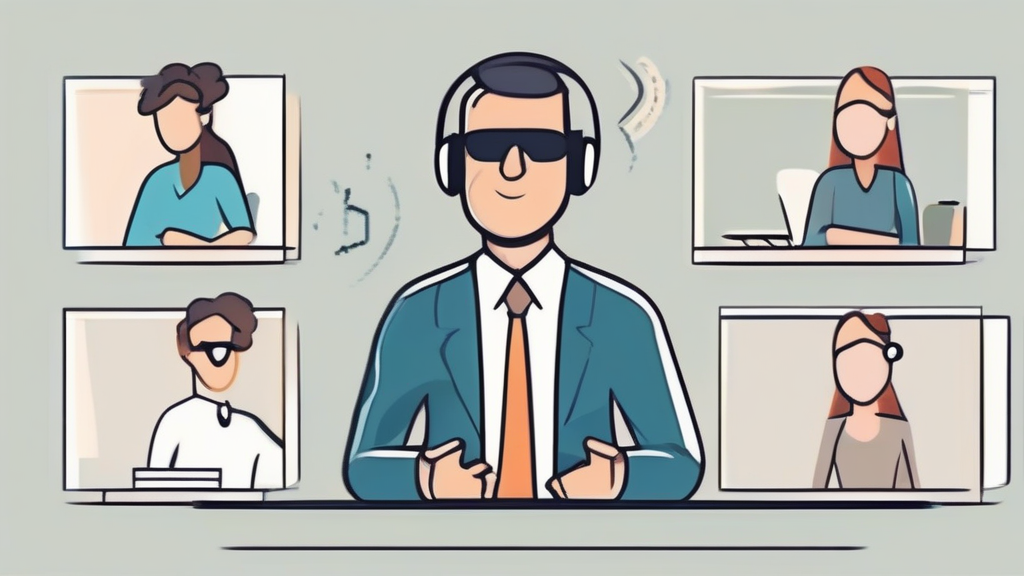
Refining your active listening skills for virtual meetings is the single most effective way to separate yourself from the background noise of remote work. We’ve all been there—staring at a grid of faces while our brains wander toward the mounting pile of unread emails. Mastering this discipline turns you from a passive participant into an indispensable team leader. It requires more than just keeping your camera on; it demands a conscious, structured approach to processing information through a screen.
Key Insights
- Non-verbal cues are harder to read remotely, so you must replace them with explicit verbal validation.
- Physical distraction management is the silent foundation of deep focus.
- Reflective listening builds trust by proving you processed the intent, not just the words.
- Strategic silence creates the necessary space for colleagues to express complex ideas.
- Closing the feedback loop prevents the misalignment that leads to project delays.
1. The "Verbal Mirror" Technique
We often fall into the trap of thinking silence equals understanding. In a virtual team environment, silence is ambiguous. Mirroring involves repeating the last few words a speaker said or summarizing their core sentiment back to them. It’s like holding a flashlight up to their intent. If they say, "I'm concerned about the Q3 budget," you respond with, "You're concerned that the current budget won't support our Q3 objectives?" This forces you to focus entirely on their input rather than planning your counter-argument.2. The Visual Anchor Drill
When you aren't looking at the camera lens, you aren't making eye contact. It’s that simple. Most people look at the screen, but the person on the other end sees you looking down or away. Place a small sticky note right next to your webcam lens. Every time you catch yourself drifting to the chat box or your secondary monitor, return your gaze to that anchor. It signals respect and ensures you don't miss the subtle micro-expressions that indicate someone is about to share a critical insight.3. Mastering Strategic Silence
Remote meetings suffer from a lack of natural flow. We feel the need to fill every second with chatter to prove we are present. Stop it. When someone finishes a complex point, count to three before you speak. This gap allows for the communication delay inherent in digital tools to clear. It also gives the speaker room to add a final, often most important, thought they were holding back.4. The Summary Loop
Active listening isn't just about hearing; it’s about retention. After a complex agenda item, take ten seconds to summarize the decision. "So, we're agreeing to push the launch date by two weeks to finalize the UI, provided marketing gets the assets by Friday. Is that right?" This prevents the "I thought you meant" disaster that ruins project timelines.5. Environmental Audit
You cannot listen if your workspace is fighting for your attention. Turn off notifications. Close the extra browser tabs. If you are constantly pinged by Slack, you are only giving that meeting 60% of your brain. Treat your virtual workspace like a physical conference room. You wouldn't check your phone under the table while your CEO is speaking, so don't do it on screen.| Technique | Primary Goal | Effort Level |
|---|---|---|
| Verbal Mirroring | Clarity & Validation | Medium |
| Visual Anchoring | Engagement | Low |
| Strategic Silence | Processing Space | High (Psychological) |
| Summary Loop | Alignment | Medium |
| Environmental Audit | Focus | Low |
How to Improve Your Active Listening Skills for Virtual Meetings
If you find yourself zoning out, change your physical posture. Sit upright, away from the back of your chair, and take notes by hand. The physical act of writing slows down your processing and anchors you to the specific words being spoken.Are virtual meetings bad for focus?
They aren't inherently bad, but they demand higher cognitive load because we have to work harder to perceive social cues. By simplifying your environment and focusing on verbal confirmation, you neutralize the "Zoom fatigue" effect.What is the biggest barrier to listening online?
Multitasking. The illusion that we can track a spreadsheet and listen to a proposal simultaneously is a myth. You aren't multitasking; you are task-switching, which degrades the quality of both actions significantly.How do I handle interruptions during a video call?
Acknowledge the interruption immediately but gently. Use phrases like, "I want to hear the rest of your point before we move on," or "Let's pause there so I can make sure I captured your full thought correctly." Your ability to listen is a professional asset that scales. When people feel truly heard, they collaborate more openly and trust you with higher-stakes information. Start applying these drills today, and watch how the quality of your professional relationships shifts. You have the tools; now, put them to work.If you've read my article, please leave a comment below so I can evaluate my website in the future so that Google will like it.
Post a Comment for "5 Proven Exercises to Sharpen Your Active Listening Skills During Virtual Meetings"