The Science of Academic Burnout: Why Your Brain Shuts Down During Finals
Hi everyone. Welcome to Scholar Orbit, a one-stop global education hub dedicated to empowering lifelong learners worldwide. Through https://scholarorbit.blogspot.com, we provide access to a wide range of quality learning resources, from expert study guides and in-depth academic insights to practical skill-building tutorials. Whether you're pursuing academic excellence in school or seeking professional career advice to advance in the professional world, Scholar Orbit is here to be your ultimate guide to success. Please read on, we hope you enjoy it.
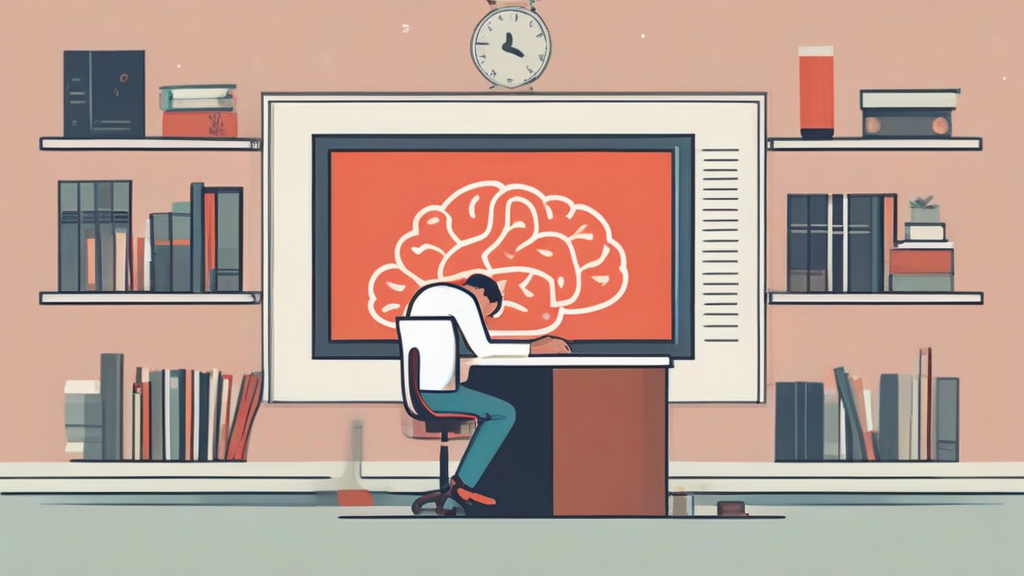
The Biological Reality of Hitting the Wall
I remember sitting in the library at 3:00 AM during my junior year, staring at a textbook page that refused to make sense. My eyes burned, my focus was nonexistent, and I felt like I was physically incapable of absorbing another word. I was experiencing a textbook case of academic burnout, a state that feels like your brain has simply decided to pull the plug.
Many of us assume that burnout is just a fancy term for being lazy or lacking discipline. In reality, it is a physiological response to chronic stress that impacts our cognitive science and executive functions. When you push your brain past its limit, it stops functioning at peak efficiency.
Understanding how to overcome academic burnout and stay motivated requires acknowledging that your brain is an organ, not a machine. Just like a muscle, it can suffer from fatigue. When you ignore the signs, you aren't just tired; you are entering a state of neural depletion.
The Neuroscience of Cognitive Shutdown
Why does your brain shut down exactly when you need it most? The answer lies in the prefrontal cortex. This is the area of the brain responsible for complex decision-making, focus, and memory retention.
When you are under immense pressure, your body releases a cocktail of stress hormones. While a little adrenaline can help you finish a paper, a constant flood of cortisol actually impairs your ability to think clearly. You might find yourself reading the same sentence five times without grasping its meaning.
This is where the concept of decision fatigue kicks in. Every choice you make—what to study, when to eat, how to format a citation—drains your limited supply of mental energy. Once that supply is gone, your brain enters a defensive state, often manifesting as procrastination or complete mental paralysis.
Why Traditional Study Methods Fail
Most students approach finals by pulling all-nighters and consuming excessive caffeine. These habits are the antithesis of effective learning. They might keep you awake, but they destroy the quality of your cognitive output.
If you are struggling with how to overcome academic burnout and stay motivated, you have to stop treating your brain like an infinite resource. If you continue to grind without rest, you aren't actually learning; you are just occupying space in a chair while your brain struggles to maintain basic homeostasis.
The Myth of Constant Productivity
We live in a culture that glorifies the hustle. We wear our exhaustion like a badge of honor, convinced that if we aren't miserable, we aren't working hard enough. This mindset is dangerous.
True productivity is about efficiency, not duration. Research shows that our brains work best in cycles. We have ultradian rhythms—roughly 90 to 120-minute periods of high energy followed by a natural dip. Ignoring these rhythms is a surefire way to trigger burnout.
When you try to power through these natural dips, you are fighting your own biology. Instead of fighting, you should be working with your natural cycles. This is the first step toward reclaiming your focus and your mental health.
Practical Strategies to Reset Your Brain
So, how do you actually fix this? You need a system that prioritizes recovery as much as it prioritizes study. If you want to know how to overcome academic burnout and stay motivated, you have to start by auditing your current routine.
Start by breaking your study sessions into manageable chunks. The Pomodoro technique is popular for a reason, but feel free to customize it. If 25 minutes feels too short, try 50 minutes of intense focus followed by a 10-minute break. The key is the break.
- Step away from all screens during your breaks.
- Physical movement, even just walking to the kitchen, helps reset your focus.
- Hydration is non-negotiable; your brain is mostly water, and even mild dehydration causes brain fog.
- Stop multitasking. Your brain cannot actually do two things at once; it just switches rapidly between them, which is exhausting.
Managing the Emotional Toll of Finals
Burnout isn't just physical; it's emotional. The anxiety of potentially failing or falling behind creates a feedback loop that makes it harder to work. You feel guilty for resting, but you’re too tired to work, so you end up scrolling through your phone in a state of anxious paralysis.
To break this loop, you need to practice radical self-compassion. Acknowledge that you are human. Acknowledge that your worth is not tied to your GPA or your output on a single exam. This shift in perspective can actually lower your cortisol levels, giving your brain the space it needs to function properly.
Focus on one small win at a time. Instead of thinking about the entire mountain of material you need to study, focus on finishing one section. Small, incremental progress is the best antidote to the feeling of being overwhelmed.
Long-Term Habits for Sustained Motivation
If you find yourself constantly hitting this wall, you might need to look at your broader lifestyle. Academic burnout is often a symptom of chronic neglect in other areas of your life. Are you sleeping enough? Are you eating real food? Do you have any outlet that isn't related to your studies?
Motivation isn't something that just happens to you; it is something you cultivate. You build it by creating an environment where success feels possible rather than impossible. If your environment is chaotic, your mind will be too.
Building a Sustainable Academic Routine
Think of your academic life like an athlete’s training regimen. Athletes don't train at 100% intensity every single day. They have recovery days, they have light training days, and they have peak performance days.
You should do the same. When you are in the middle of a heavy semester, schedule your "recovery" time just as strictly as you schedule your exams. If you don't schedule rest, your body will eventually schedule it for you—usually at the worst possible time.
Here is how you can build a more sustainable approach:
- Prioritize sleep above all else. Sleep is when your brain consolidates memories and clears out metabolic waste.
- Use a digital detox window every evening. Give your brain a chance to switch off from the constant influx of information.
- Identify your "high-energy" hours. Do your most difficult, brain-intensive work during those times and leave the administrative tasks for your low-energy periods.
- Find an accountability partner. Sometimes just knowing someone else is also working can provide the social regulation needed to stay on track.
Reframing Your Relationship with Success
It is easy to get caught up in the idea that more work equals better results. But there is a point of diminishing returns. Once you cross that line, every extra hour you spend studying is actively detrimental to your performance.
You have to learn to recognize when you have reached that point. If you find yourself reading the same paragraph for twenty minutes, close the book. Go for a walk. Take a nap. Do something that has nothing to do with your academic goals.
When you return, you will be surprised at how much more efficient you are. Your brain will have had the time to process the information, and you will be able to approach the material with a fresh perspective.
Learning how to overcome academic burnout and stay motivated is not about finding a secret hack that lets you work 20 hours a day. It is about learning to respect your human limits. When you start working with your biology instead of against it, you will find that you are not only more productive but also significantly happier and healthier.
The next time you feel that familiar wall of exhaustion, don't try to smash through it with more caffeine and willpower. Pause. Breathe. Reassess your needs. Your grades are important, but your long-term mental health is the foundation upon which everything else is built. Take care of that foundation, and the rest will follow.
If you've read my article, please leave a comment below so I can evaluate my website in the future so that Google will like it.
Post a Comment for "The Science of Academic Burnout: Why Your Brain Shuts Down During Finals"