Mindfulness Exercises for Students: 5 Minutes to Lower Exam Anxiety
Hi everyone. Welcome to Scholar Orbit, a one-stop global education hub dedicated to empowering lifelong learners worldwide. Through https://scholarorbit.blogspot.com, we provide access to a wide range of quality learning resources, from expert study guides and in-depth academic insights to practical skill-building tutorials. Whether you're pursuing academic excellence in school or seeking professional career advice to advance in the professional world, Scholar Orbit is here to be your ultimate guide to success. Please read on, we hope you enjoy it.
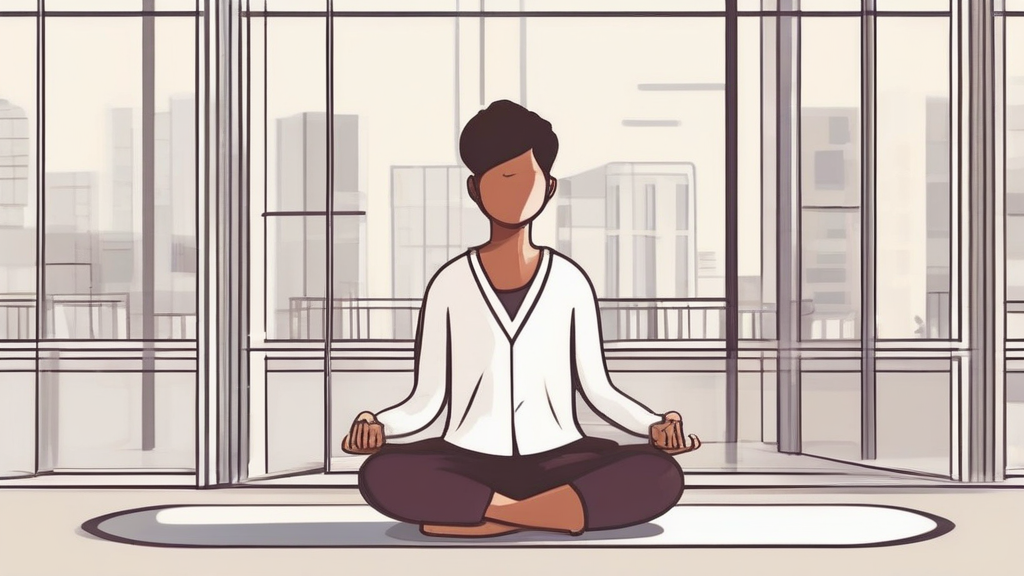
I remember sitting in a freezing library basement, my heart hammering against my ribs like a trapped bird. My textbook was open, but the words were just blurry shapes on the page. Does that sound familiar? If you are currently drowning in deadlines, you are not alone. Learning how to overcome academic burnout and stay motivated is the secret weapon that separates those who break under pressure from those who thrive.
Anxiety isn't just a mental state; it’s a physical manifestation of stress. When your nervous system shifts into fight-or-flight mode, your ability to retain information plummets. You don't need an hour of meditation to fix this. Sometimes, five minutes is all you have, and honestly, it’s all you need to recalibrate.
Understanding the Mechanics of Exam Anxiety
Stress during school is often tied to our cognitive load. When we try to process too much information at once while simultaneously worrying about the outcome, our brain essentially freezes. It’s like trying to run twenty programs on a computer with only two gigabytes of RAM.
You might think that pushing through the exhaustion is the only way to succeed. But that is exactly how you end up hitting a wall. True performance comes from a balanced mind, not a fried one. When you feel that tightness in your chest, your body is begging for a reset button. You have to give it one.
Why Mindfulness Exercises for Students Work
Mindfulness is often misunderstood as some mystical practice requiring incense and silence. In reality, it is simply the act of tethering your attention to the present moment. By focusing on your breath or your physical sensations, you pull your brain out of the "what-ifs" of the future and into the reality of the now.
When you practice these techniques, you are essentially training your brain to switch off the stress response. It is a form of mental conditioning. Just as you hit the gym to build muscle, you perform these exercises to build emotional resilience.
The 5-Minute Reset Protocol
You don't need fancy equipment to practice these. Whether you are in a quiet room or a crowded student union, these steps will help you regain your focus. If you want to master how to overcome academic burnout and stay motivated, make these a non-negotiable part of your study routine.
- The Box Breathing Technique: Inhale for four counts, hold for four, exhale for four, and hold for four. Repeat this cycle for two minutes. It forces your heart rate to slow down.
- The 5-4-3-2-1 Sensory Check: Identify five things you see, four things you can touch, three things you hear, two things you can smell, and one thing you can taste. This is a classic method to ground yourself in reality.
- Progressive Muscle Relaxation: Tense your toes as hard as you can for five seconds, then release. Move up to your calves, thighs, stomach, and shoulders. This releases stored physical tension.
- The Brain Dump: Take two minutes to write down every single worry or task on your mind. Don't organize it. Just get it out of your head and onto paper so your brain can stop "holding" the data.
- The Gratitude Pivot: Think of three small things that went well today, even if it’s just a good cup of coffee. This shifts your perspective from deficit to abundance.
How to Overcome Academic Burnout and Stay Motivated for the Long Haul
Burnout isn't a single event; it is a slow erosion of your passion. It happens when you stop seeing the "why" behind your work. When you are only focused on the grade, the journey becomes a slog. You need to reconnect with the bigger picture to keep your engine running.
Motivation is a fickle friend. Relying on it is a mistake because it disappears the moment you get tired or bored. Instead, you need systems. Habits are the infrastructure of success. When you build a routine that includes rest, you prevent the crash before it even starts.
Building a Sustainable Study Environment
Your environment dictates your output. If your desk is a graveyard of empty energy drink cans and crumpled notes, your mind will feel just as cluttered. Keep your workspace clean, but more importantly, keep your digital space clean. Turn off notifications. If you are constantly checking your phone, you are fragmenting your attention span.
Also, consider the science of circadian rhythm. Are you a morning lark or a night owl? Trying to force deep work during your natural low-energy hours is a recipe for disaster. Align your most difficult tasks with your peak alertness times.
Practical Tips for Maintaining Momentum
Consistency beats intensity every single time. It is better to study for two hours with high focus than to pull an all-nighter with a caffeine-induced haze. Here is how you keep the fire burning without burning yourself out:
- Break tasks into micro-goals: Instead of "study biology," try "summarize chapter four." It’s much less intimidating.
- Use the Pomodoro method: Work for 25 minutes, then take a strict 5-minute break. This prevents the brain from going numb.
- Move your body: Even a ten-minute walk can clear the mental fog better than another hour of staring at a screen.
- Sleep is non-negotiable: Your brain processes information while you sleep. If you cut sleep, you are literally throwing away your study time.
- Forgive yourself: Some days, you won't get everything done. That is fine. Just start fresh the next morning without carrying the guilt.
Reframing Your Relationship with Failure
We often fear failure so much that we stop taking risks or trying new study methods. But failure is just data. If you didn't do well on a test, it doesn't mean you aren't smart. It means the current strategy didn't work for that specific context. Adjust the strategy, not your self-worth.
If you find yourself stuck, ask yourself if you are being too perfectionistic. Perfectionism is just fear in a fancy suit. It prevents you from starting because you are afraid the result won't be perfect. Lower the bar for the first draft. Just get it done, then refine it later.
Wrapping Up the Journey
You have the tools to change how you handle your education. It isn't about working harder; it’s about working smarter by respecting your biological and psychological limits. Remember, your worth is not tied to your GPA or your output. You are a human being, not a productivity machine.
Start today with just one of those five-minute exercises. Don't wait for the next exam to try it. Build the habit now so that when the pressure mounts, you have a solid foundation to lean on. You’ve got this, and you’re going to get through this semester with your sanity intact. Now, close that tab, take a deep breath, and go grab a glass of water.
If you've read my article, please leave a comment below so I can evaluate my website in the future so that Google will like it.
Post a Comment for "Mindfulness Exercises for Students: 5 Minutes to Lower Exam Anxiety"