Visual Learning: Creating Mind Maps That Make Memorization Easy
Hi everyone. Welcome to Scholar Orbit, a one-stop global education hub dedicated to empowering lifelong learners worldwide. Through https://scholarorbit.blogspot.com, we provide access to a wide range of quality learning resources, from expert study guides and in-depth academic insights to practical skill-building tutorials. Whether you're pursuing academic excellence in school or seeking professional career advice to advance in the professional world, Scholar Orbit is here to be your ultimate guide to success. Please read on, we hope you enjoy it.
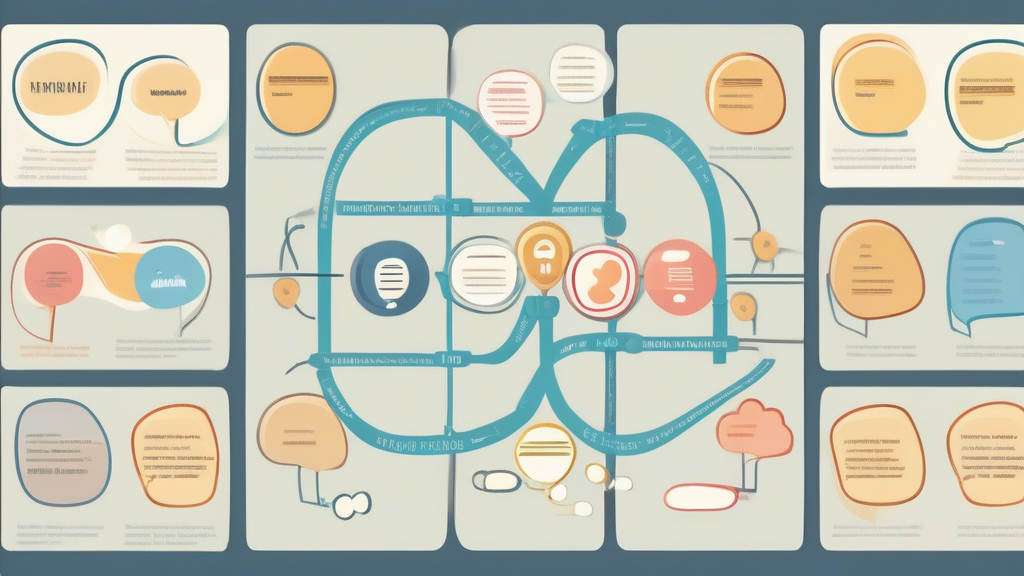
I still remember the night before my first college finals. My desk was a graveyard of crumpled highlighters and half-finished coffee cups. I had pages of linear notes that looked like a frantic spider had crawled across the paper. Nothing was sticking.
That was the moment I realized my linear, top-to-bottom writing style was failing me. I needed a better approach. If you are struggling to retain information, you are likely looking for note-taking strategies that actually work for final exam prep. That is where visual thinking changes everything.
The Science of Seeing Your Ideas
Our brains are not designed to process information like a Microsoft Word document. We think in associations, colors, and spatial relationships. When you force your brain to process information in a rigid, vertical list, you are fighting against your own biology.
Visual learning is about more than just making pretty pictures. It is about cognitive organization. By using mind mapping, you create a central hub for a topic and branch out into related concepts. This mimics how our neurons actually fire when we learn something new.
Why Mind Maps Beat Linear Notes
Linear notes often lead to the "illusion of competence." You read your notes, they look familiar, and you assume you know the material. But when the test paper hits your desk, your mind goes blank.
Mind maps force you to actively synthesize information. You cannot just transcribe a lecture; you have to decide where a concept fits in the hierarchy. This active engagement is exactly why these are among the most effective note-taking strategies that actually work for final exam prep.
- They provide a bird’s-eye view of an entire subject.
- They highlight the relationships between disparate ideas.
- They make recall easier through spatial memory.
- They reduce the sheer volume of text you need to review.
Getting Started: The Anatomy of a Map
You do not need to be an artist to draw a map. In fact, if your drawing is too perfect, you might be focusing more on the art than the content. Keep it messy if that helps you think.
Start with a blank sheet of paper in landscape orientation. Place your main topic in the center. Use a bold color or a large circle to make it pop. This is your anchor point.
Building Your Branches
From your central topic, draw thick branches leading to sub-topics. Think of these as the chapters of a book or the main themes of a lecture. Keep the text on these branches short—just one or two keywords.
As you move further out, use thinner branches for secondary details. If you are studying history, your main branch might be "The Industrial Revolution," while a smaller branch extending from it could be "Steam Engine."
Don't be afraid to use mnemonic devices or symbols. A quick sketch of a lightbulb for an idea or an exclamation point for a key fact can act as a visual trigger for your memory later on.
Note-Taking Strategies That Actually Work for Final Exam Prep
The goal of any study session is to move information from short-term to long-term memory. If you just reread your textbook, you are wasting time. You need to manipulate the data.
Start by identifying the core pillars of your exam material. If you are preparing for a biology final, your pillars might be Cell Structure, Genetics, and Evolution. Each of these gets its own main branch.
Now, fill in the details. Use different colors for different categories. This color-coding is a secret weapon for memory retrieval during a stressful exam. When you look at a question, your brain might recall, "Oh, that was on the green branch," which instantly narrows down the possibilities.
The Power of Iteration
The first map you draw will rarely be your best. That is okay. Use your first attempt to get all the information out of your head. Then, set it aside.
Try to redraw the map from memory. This is called active recall, and it is the gold standard for learning. If you get stuck, check your original map, fill in the gap, and try again. This process is how you solidify neural pathways.
Common Pitfalls to Avoid
A lot of people get caught up in the "perfect map" trap. They spend three hours picking out the right pens and drawing perfect boxes. That is not studying—that is procrastination in disguise.
Keep your maps functional. If you find yourself writing whole sentences on your branches, stop. You are turning your map back into a list. Use keywords, short phrases, and images.
Also, avoid overcrowding. If a branch gets too dense, break it off into its own separate mind map. It is better to have five clear, focused maps than one giant, unreadable mess that looks like a bowl of spaghetti.
Integrating Digital and Analog Tools
I personally prefer pen and paper. There is a tactile connection that happens when you write by hand that just doesn't occur when you are clicking a mouse. However, I know many people who swear by digital tools.
If you prefer digital, look for software that allows for non-linear movement. You want to be able to drag and drop branches as your understanding of the topic evolves. The ability to rearrange your ideas is one of the biggest advantages of going digital.
Whether you use a whiteboard, a giant piece of butcher paper, or an iPad, the principles remain the same. The medium matters less than the mental effort you put into structuring the information.
Refining Your Workflow for Exam Season
When you are two weeks out from your finals, your strategy needs to shift. You don't have time to re-learn everything from scratch. This is where your library of mind maps becomes a high-speed review tool.
Spend five minutes reviewing one map before bed. The next morning, try to recreate it. If you can draw it quickly, you know it. If you stumble, that is your signal to focus your study time on that specific branch.
This targeted approach is why these specific note-taking strategies that actually work for final exam prep are so effective. You stop wasting time on what you already know and start attacking the gaps in your knowledge.
Final Thoughts on Visual Success
Memorization doesn't have to be a chore. When you stop fighting your brain's natural tendencies and start working with them, studying becomes much less painful.
You have the tools to turn a mountain of confusing data into a clear, visual landscape. Grab some markers, clear off your desk, and start mapping out your success. You will be surprised at how much more you retain when you can actually see the connections between your ideas.
Give this method a shot for your next big project or test. You might just find that you are much smarter than your old linear notes ever let you believe. Start small, stay consistent, and watch your recall speed improve.
If you've read my article, please leave a comment below so I can evaluate my website in the future so that Google will like it.
Post a Comment for "Visual Learning: Creating Mind Maps That Make Memorization Easy"