Mastering the Blurting Method: A Stress-Free Way to Test Your Knowledge
Hi everyone. Welcome to Scholar Orbit, a one-stop global education hub dedicated to empowering lifelong learners worldwide. Through https://scholarorbit.blogspot.com, we provide access to a wide range of quality learning resources, from expert study guides and in-depth academic insights to practical skill-building tutorials. Whether you're pursuing academic excellence in school or seeking professional career advice to advance in the professional world, Scholar Orbit is here to be your ultimate guide to success. Please read on, we hope you enjoy it.
Why Your Current Study Routine Might Be Failing You
We have all been there. You spend hours highlighting textbooks, re-reading your lecture notes until your eyes glaze over, and listening to recorded lectures on double speed. Yet, when the test paper hits your desk, your mind goes blank. It’s frustrating, right? The issue isn’t your intelligence. It’s your technique. Passive review—reading and highlighting—is essentially a trick your brain plays on you. It feels productive because the information looks familiar, but familiarity is not the same as mastery. If you are looking for note-taking strategies that actually work for final exam prep, you need to shift from passive consumption to active output. This is where the blurting method enters the picture. It’s a simple, low-tech, and highly effective way to force your brain to actually do the heavy lifting of retrieving information.What Exactly is the Blurting Method?
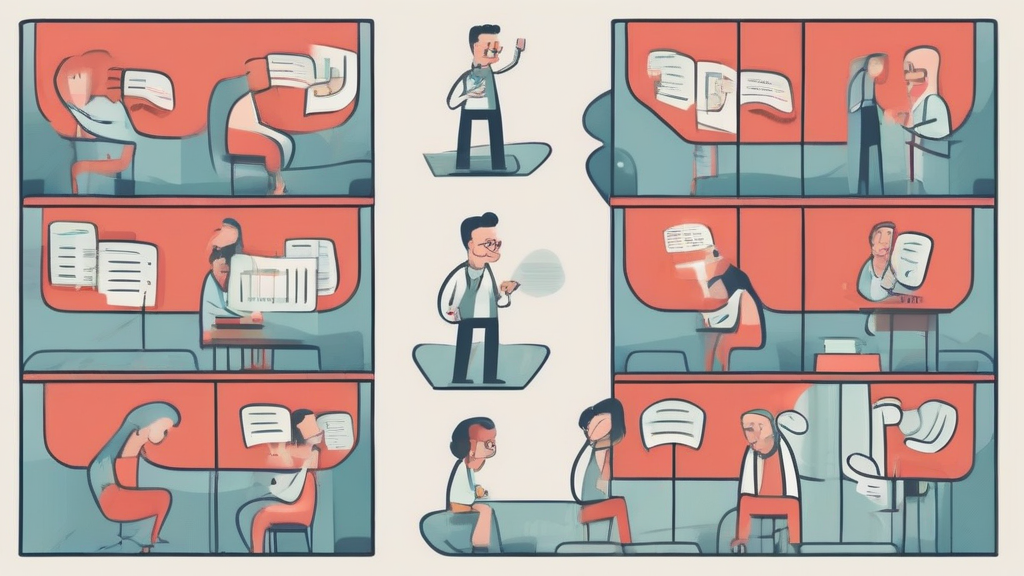
At its core, the blurting method is a form of active recall. It requires you to dump everything you know about a specific topic onto a blank sheet of paper without looking at your resources. Think of it as a brain dump. You aren't trying to write a beautiful essay or a perfectly structured outline. You are simply retrieving information from your long-term memory and forcing it onto the page. Why does this work? Because learning happens when you try to pull information out of your head, not when you push it in. By forcing yourself to retrieve data, you create stronger neural pathways, making that information significantly easier to access during a high-pressure final exam.Step-by-Step: How to Master the Blurting Method
You don’t need fancy software or a subscription to a productivity app to do this. You just need a pen, some paper, and a bit of courage.1. Prepare Your Subject Matter
Start by picking one specific topic or chapter. Don't try to "blurt" an entire semester's worth of content at once; that’s a recipe for burnout. Focus on a single concept, like the Krebs cycle in biology or the causes of the Industrial Revolution in history.2. The "Blurt" Phase
Set a timer for five to ten minutes. Take a blank sheet of paper and write down everything you can remember about that topic. Scribble, draw diagrams, use bullet points, or write messy sentences. Do not look at your notes. Do not look at your textbook. If you get stuck, force yourself to sit with that discomfort for a moment. That struggle is exactly where the learning happens.3. The Comparison Phase
Once the timer goes off, grab a different colored pen. Now, open your textbook or your original lecture notes. Go through what you wrote and fill in the gaps. Did you miss a key date? Add it in red. Did you misunderstand a concept? Correct it with a different color. This visual contrast shows you exactly what you know and, more importantly, what you don't know.Why This Technique Beats Traditional Highlighting
Most students rely on highlighting because it’s easy. It feels like you’re doing something meaningful, but it’s actually a very shallow way to engage with information. When you highlight, you’re just marking the page; you aren't testing your ability to explain it. The blurting method is different because it creates a feedback loop. You immediately see the difference between what you thought you knew and what you can actually recall on demand. Furthermore, this method is fantastic for managing test anxiety. By practicing the act of retrieving information under a time constraint, you’re desensitizing yourself to the pressure of the exam room. You’ll be used to that "blank page" feeling, and you’ll know exactly how to push through it.Integrating Blurting into Your Exam Prep Schedule
Consistency is the secret sauce. You shouldn’t wait until the night before the final exam to start using these note-taking strategies that actually work for final exam prep. Instead, weave them into your weekly routine. Try doing one "blurt" session at the end of every week. If you’re a student or an entrepreneur trying to learn a new skill, take fifteen minutes on a Friday afternoon to dump everything you learned that week onto a page. By the time the big test or the big presentation comes around, you won’t be cramming. You’ll be reviewing your "correction" notes—the parts that you previously identified as weak spots. This is a much more efficient use of your time than re-reading chapters you already understand.Common Pitfalls to Avoid
Even a simple method like this has its traps. Here is how to keep your practice effective: * Don't cheat: If you look at your notes during the "blurt" phase, you aren't practicing recall; you're just copying. * Don't obsess over neatness: This isn't about creating beautiful study guides for Instagram. It’s about testing your brain. If your handwriting is messy, that’s fine. * Don't skip the correction phase: The correction phase is where the actual learning happens. Without it, you’re just reinforcing your own mistakes. If you find yourself consistently blanking on certain topics, that’s a signal. It means you need to go back to the primary source material and re-read that specific section with more focus. It’s a diagnostic tool as much as a study one.Adapting the Method for Different Subjects
You might be wondering if this works for subjects like mathematics or coding. The answer is a resounding yes. For math, instead of writing prose, "blurt" the steps to a problem or the derivation of a formula. If you can write out the steps to solve a quadratic equation from memory, you’ve mastered the process. For language learning, "blurt" all the vocabulary words you know for a specific category, like "food" or "travel." Then, go back and add the ones you missed. The flexibility of this method is why it remains one of the most reliable note-taking strategies that actually work for final exam prep across almost every discipline.The Psychological Benefits of Active Retrieval
There’s a sense of relief that comes with knowing what you don’t know. Many people carry around a low-level hum of anxiety about their exams because they aren't sure how much they’ve actually retained. When you use the blurting method, that uncertainty vanishes. You have physical evidence of your progress. You can see the stack of paper growing, and you can see your corrections becoming fewer and fewer over time. That is a massive confidence booster. It shifts your mindset from "I hope I remember this" to "I have tested myself on this, and I know I can recall it." That shift in perspective is often the difference between a panicked test-taker and a calm, prepared one.Make It a Habit
You don’t have to overhaul your entire life to see results. Start small. Pick one subject that you find particularly difficult. Commit to one five-minute blurt session per day for one week. See how you feel after that week. Do you feel more confident? Can you explain the concepts better to a friend? Most likely, the answer will be yes. The goal isn't to be a perfect student or to memorize every single word in the textbook. The goal is to build a brain that can access information when it matters most. That’s what high-level learning is all about.Final Thoughts on Your Exam Journey
Preparing for exams doesn't have to be a miserable, soul-crushing experience. By choosing methods that align with how our brains actually store and retrieve information, you can stop the endless cycle of re-reading and start seeing real, measurable progress. The blurting method is simple, it’s effective, and it’s free. It puts you in the driver’s seat of your own education. Stop passively consuming information and start demanding it back from your memory. Grab a pen, clear your desk, and try it today. You might be surprised at just how much you actually know when you give yourself the space to prove it. Your future self, sitting in that exam hall with a clear mind and a steady hand, will thank you for it.If you've read my article, please leave a comment below so I can evaluate my website in the future so that Google will like it.
Post a Comment for "Mastering the Blurting Method: A Stress-Free Way to Test Your Knowledge"