Buy vs. Borrow: The Most Cost-Effective Ways to Access Educational Resources
Hi everyone. Welcome to Scholar Orbit, a one-stop global education hub dedicated to empowering lifelong learners worldwide. Through https://scholarorbit.blogspot.com, we provide access to a wide range of quality learning resources, from expert study guides and in-depth academic insights to practical skill-building tutorials. Whether you're pursuing academic excellence in school or seeking professional career advice to advance in the professional world, Scholar Orbit is here to be your ultimate guide to success. Please read on, we hope you enjoy it.
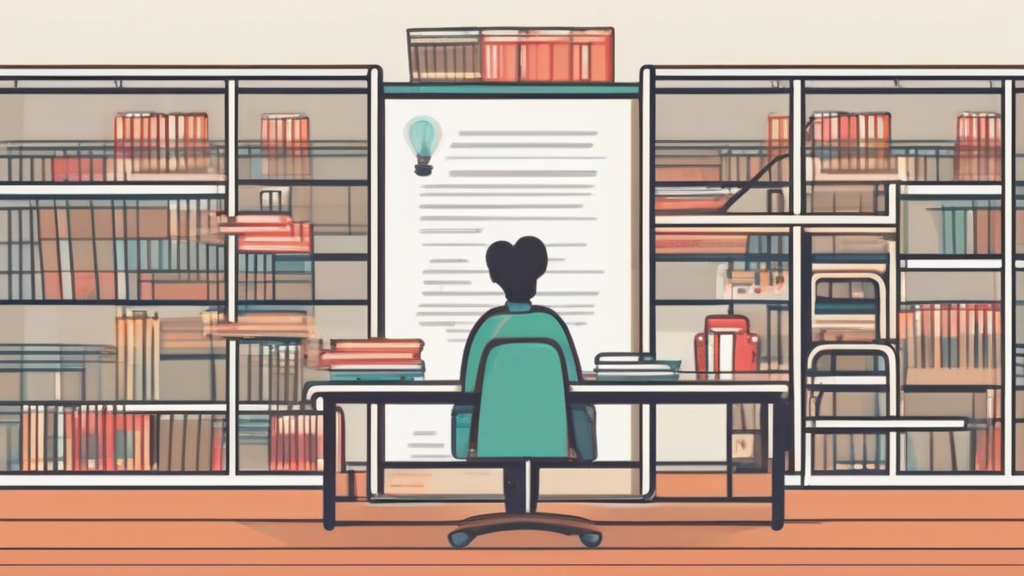
I remember sitting at my desk three years ago, staring at a stack of expensive textbooks that cost more than my monthly grocery bill. I wanted to pivot my career, but the financial barrier to entry felt like a brick wall. That’s when I realized that hoarding knowledge doesn't require owning every single resource. If you are serious about growth, you need a strategy that balances your wallet with your ambition.
Whether you are a busy entrepreneur or a curious professional, the debate between buying and borrowing materials is constant. Before we break down those financial choices, let's talk about the logistics. If you're going to commit to this path, you need the top 10 time management hacks for busy lifelong learners to make sure those borrowed or bought books actually get read.
The Financial Dilemma: Buying vs. Borrowing
When you purchase a book or a course, you gain permanent access. There is a psychological comfort in owning a physical library, but it comes with a high price tag. Conversely, borrowing through libraries or digital lending platforms is virtually free. The real cost isn't just the money; it's the space in your home and the mental clutter of unfinished projects.
Why Borrowing Often Wins
Most of us suffer from the "collector's fallacy." We buy books thinking we are buying the knowledge inside, but we are really just buying the potential to learn. Borrowing removes the pressure of investment. If a book doesn't resonate, you return it without guilt.
Public libraries have evolved significantly. Many now offer access to premium digital databases and e-books that you can download directly to your tablet. This is a massive win for your budget and your shelf space.
When Buying is Actually Smarter
Sometimes, you need a reference manual that you will return to for years. If a resource is dense with data or serves as a foundational text for your career, buying is the move. Think of these as your professional anchors. You wouldn't borrow a hammer from a neighbor every time you need to hang a picture, right? Own the tools that build your daily work.
Top 10 Time Management Hacks for Busy Lifelong Learners
So, you’ve decided on your resources. Now, how do you actually use them without burning out? Balancing a career and personal development is a high-wire act. Here is how I manage to keep the momentum going without sacrificing my sanity.
1. The Fifteen-Minute Sprint
Stop waiting for a two-hour block of free time that never comes. Instead, commit to fifteen minutes of focused study during your morning coffee. Consistency beats intensity every single time.
2. Audit Your Digital Environment
Your phone is a distraction factory. Use app blockers to silence social media while you are in learning mode. If you can't see the notification, you won't feel the urge to check it.
3. Leverage Audio Learning
Turn your commute or your gym session into a classroom. Podcasts and audiobooks are perfect for absorbing complex topics while you handle mundane tasks. It is the ultimate way to multitask without losing focus.
4. The Pomodoro Method Refined
Work in 25-minute intervals, but keep a notebook nearby. When a distracting thought pops up—"I need to buy milk"—write it down and keep going. Address the list only after your session is complete.
5. Prioritize Your Learning Goals
Not all information is created equal. Use the Pareto principle to identify the 20% of the material that will give you 80% of the results. Focus your limited time there.
6. Batch Your Study Sessions
Context switching kills productivity. If you are learning coding on Monday, don't try to learn Spanish on Tuesday. Dedicate specific days to specific subjects to keep your brain in the right gear.
7. The "Done is Better Than Perfect" Rule
You don't need to memorize every footnote. Aim to understand the core concepts and apply them. Taking messy action is always superior to perfect inaction.
8. Create a Dedicated Learning Space
Your brain loves cues. If you always sit in the same chair to study, you will enter a flow state much faster. Keep your books, pens, and laptop ready so there is zero friction when you start.
9. Practice Active Recall
Don't just re-read your notes. Close the book and try to explain the concept out loud to an imaginary student. If you can't explain it simply, you don't know it well enough yet.
10. Schedule Your Rest
Learning is cognitive labor. If you don't schedule downtime, your brain will force it upon you through burnout. Treat your rest as a non-negotiable part of your professional development plan.
Integrating Strategy into Your Routine
The top 10 time management hacks for busy lifelong learners I mentioned above aren't just suggestions; they are the framework for a sustainable career. When you stop viewing learning as a chore and start viewing it as a strategic investment, the whole dynamic shifts. You aren't just "reading a book"—you are upgrading your professional software.
Consider the trade-offs carefully. If you are tight on cash, double down on the library and digital lending. If you are tight on time, buy the resources that allow you to skip the research phase and get straight to the application. Your resources should serve your goals, not the other way around.
Why Most People Fail at Self-Education
The biggest reason people quit is that they lack a system. They buy a course, watch two videos, and then get distracted by a shiny new project. Without a structure, your interest will naturally wane. This is why I advocate for the "Buy or Borrow" decision tree.
If you pay for it, you have a financial stake. If you borrow it, you have a time-bound deadline. Both of these are forms of accountability. Use them to your advantage. If you find yourself constantly borrowing books and never reading them, maybe the act of paying for a course will provide the necessary "skin in the game" to keep you moving forward.
Building a Habit That Sticks
Habits are fragile in the beginning. Don't try to change your entire life overnight. Pick one of the time management hacks from this list and apply it for a full week. Once that feels like a natural part of your day, add another one. This slow, steady approach is how you build a life of continuous learning.
Remember that your brain is a muscle. It gets tired, it needs recovery, and it grows through resistance. Don't be afraid of the hard topics. If something feels difficult, that's exactly where the growth is happening. If you breeze through a book, you probably haven't learned anything new.
Final Thoughts on Your Learning Journey
Choosing between buying and borrowing is ultimately about understanding your own behavior. Are you the type of person who needs the physical presence of a book to feel motivated? Or are you the type who thrives on the efficiency of digital access? There is no wrong answer, provided you actually follow through with the study.
Take these strategies and apply them to your own life starting today. Pick one resource you've been meaning to tackle, decide whether to buy it or borrow it, and set your first 15-minute sprint. You have the tools, the knowledge, and the capacity to improve. Now, go make it happen.
Ready to start? Take a look at your current reading list and audit it. Remove the books you know you won't read, borrow the ones you're curious about, and buy the ones that will define your career. Your future self will thank you for the intentionality you put into your education today.
If you've read my article, please leave a comment below so I can evaluate my website in the future so that Google will like it.
Post a Comment for "Buy vs. Borrow: The Most Cost-Effective Ways to Access Educational Resources"